Feeds:
Posts
Comments

Posts Tagged ‘flor de muerto’

On November 3rd, K and I headed to San Antonino Castillo Velasco — a Zapotec community 24 miles south of Oaxaca city. It is a village known for growing flowers and for the floral embroidery decorating its traditional blouses and dresses. 
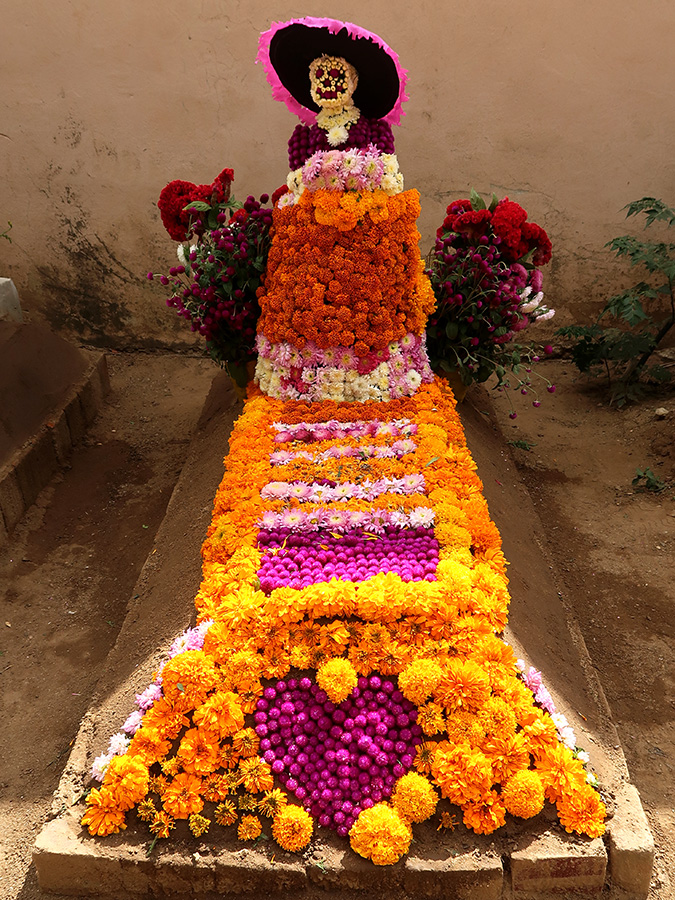
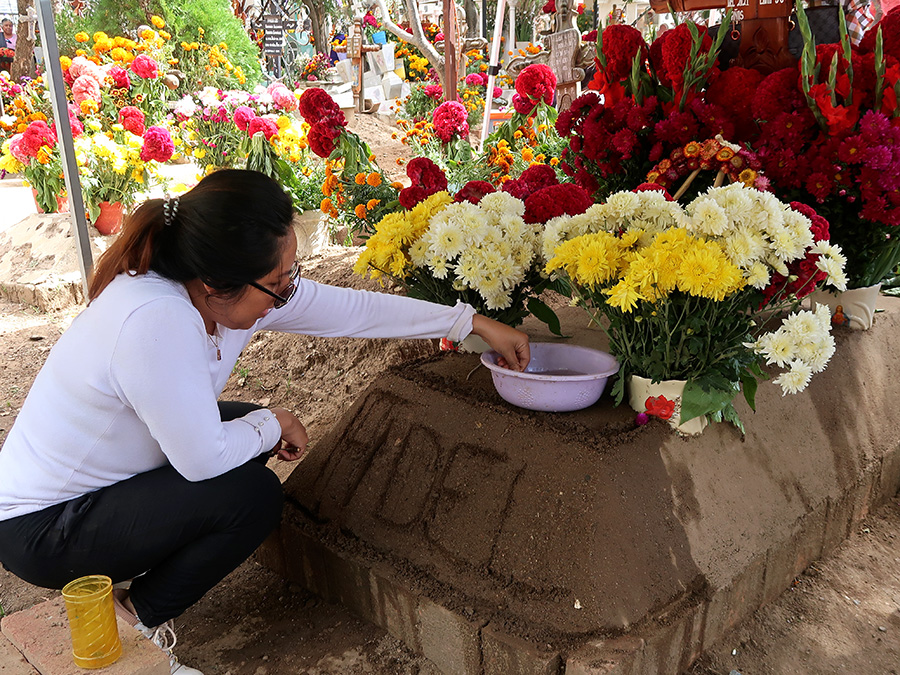
Their difuntos (departed souls) understand their families are busy providing flowers for altars and tombs in the surrounding villages in the valley and wait until November 3-4 to return and spend time with their living loved ones. Because floral design plays such an important role in the traditions and commerce of the village, it is carried over to the elaborate decorating of the tombs in the panteón (cemetery).

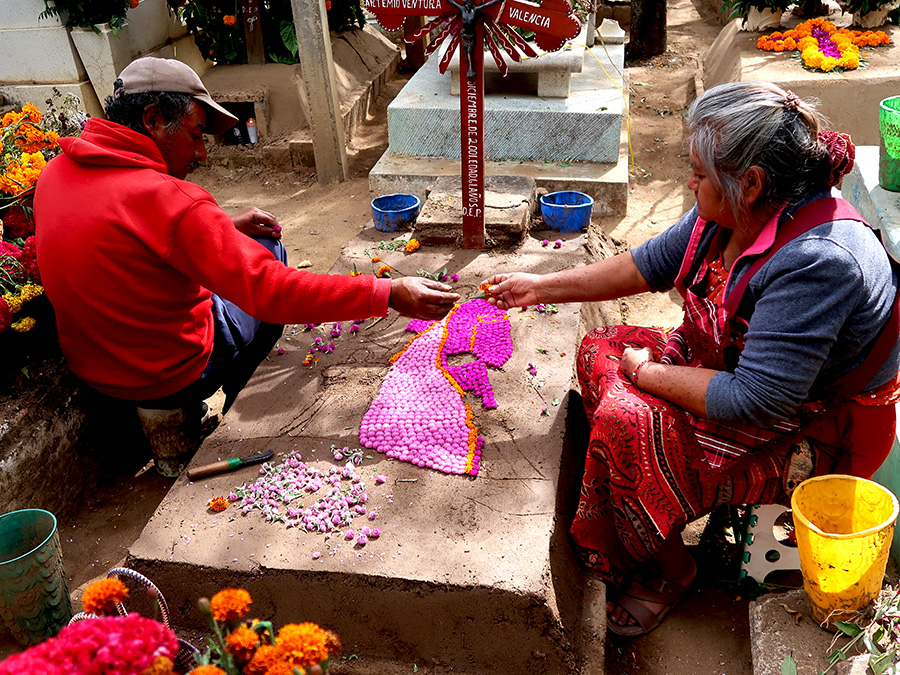
One of the flowers grown is the “flor inmortal” (immortal flower), so named because, even when dried, it retains its brilliant colors. Artisans in the village use these flowers to create intricately designed figures on display December 23 in the city of Oaxaca during Noche de Rábanos and to decorate the graves of loved ones during Día de Muertos.
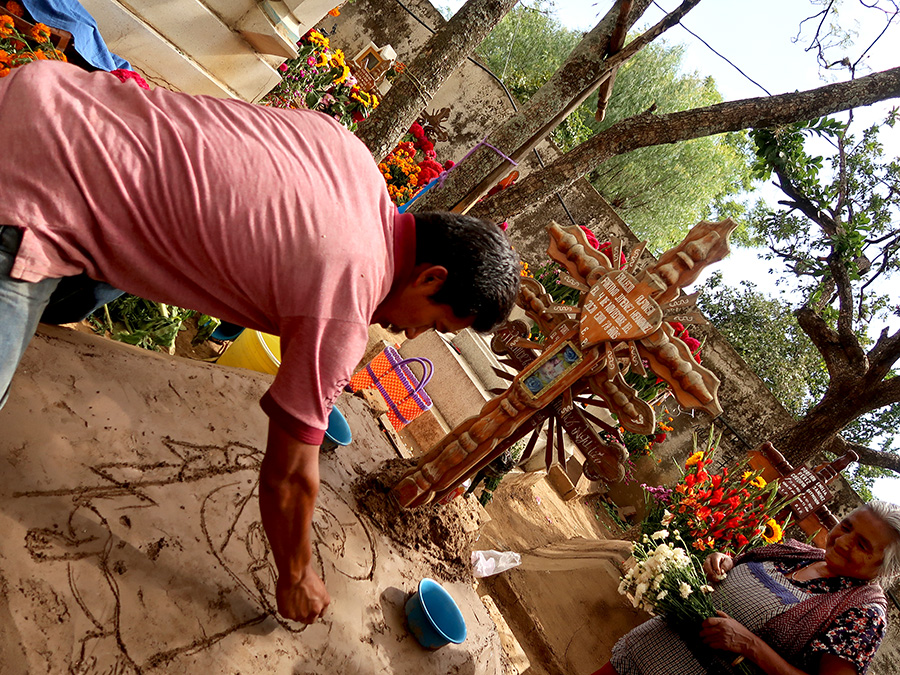
In the cemetery villagers mix the area’s very fine dirt with water, cover the graves with this damp mud, and use a trowel to smooth it. Once dry, they outline designs and religious imagery into this mud canvas and use flowers (fresh and dried) to paint the scene. Entire families are involved — male and female, young and old. It is a labor of love and incredibly moving to behold.
Read Full Post »

October 30, 2016, around and about the valley of Oaxaca, preparations were underway for Día de Muertos.  Bread, fruit, chocolate, nuts, and flowers for sale spilled from mercados into the streets; the difuntos must be fed… and only the best!

Our first stop was Villa Díaz Ordaz for their first Expo Festival del Pan de Muerto.  It was day two of the 3-day festival and, of course, we were there early (around noon), but everyone was so warm and welcoming.  Hopefully, it will continue to grow in future years, as this is a sweet village in a picturesque setting at the base of the mountains.

p1220852

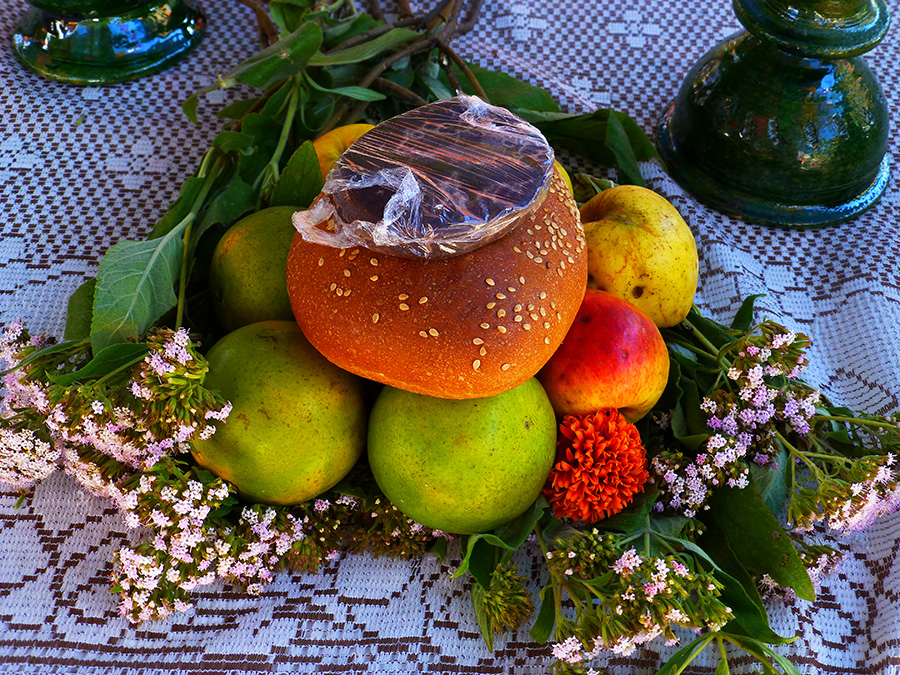
In Díaz Ordaz, they call these tiny, spicy-scented, lavender flowers “flor de muerto” and we were informed that they are even more important than cempasuchil (marigolds).

p1220847

After buying some surprisingly flavorful (whole grain!) pan de muerto for my ofrenda, we headed off to San Pablo Villa de Mitla.  Mitla has the most beautiful pan de muerto and two years ago we stumbled on their Pan de Muertos festival and competition.  A dazzling display of intricately decorated breads lined the sidewalks under the portales.  Alas, the festival was not continued, as their bread is in such demand, the bakers were too busy to take time out for an expo and competition.  So, like last year, we just enjoyed the sights and aromas of their bustling mercado.

p1220868

Have you ever seen so many varieties of bananas???  And, now for the famous  pan de muertos…

p1220861

Returning home, I added the bread and flor de muerto to my ofrenda.  Following a siesta, I ventured out into the streets of the city in search of a comparsa.  I never found it, but, as you could see from my previous post, the city was teeming with people and activity.  However, amid the merriment and mayhem, there were scenes of tranquility.

img_2135

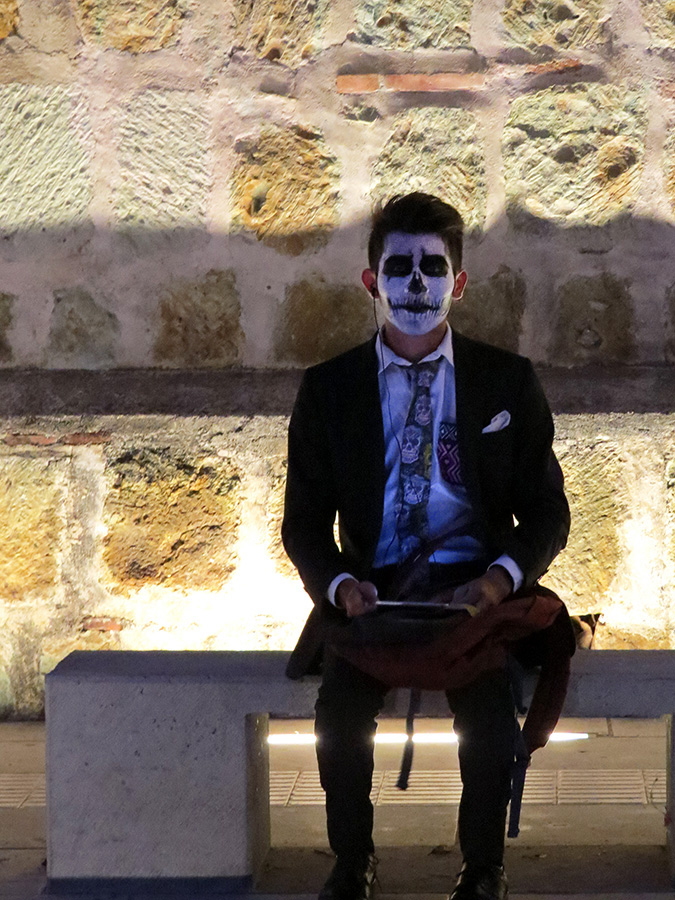
A catrin ejecutivo?

img_2172

The copal incense beckoned the difuntos…  They began arriving this morning, seconds after midnight.

Save

Save

Save

Read Full Post »