November has come and now is almost gone. Time accelerated. Where did it go? Retired life… I thought it would slow down… apparently not when one lives in Oaxaca. There’s too much to see and experience!
Los Días de Muertos
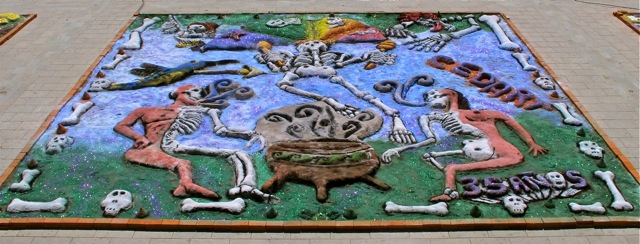
The month began with Los Días de Muertos. I signed-up to accompany my extraordinarily energetic Spanish teacher, Laura Olachea, on two “field trips.” About 30 of us (her students and their guests) boarded a bus the night of Oct. 31, bound for the old and new cemeteries of Xoxocotlán. Tens of thousands of tourists (overwhelmingly Mexican) seemed to have descended on this small village, the bus was forced to park 8-10 blocks away on a dirt side street, the sky was pitch black, and there were no street lights. Somehow, we all managed to keep up with our tiny maestra as she lead us through the crush of people and vendors (food, drink, sugar skulls, candles, you name it!) to the old cemetery.
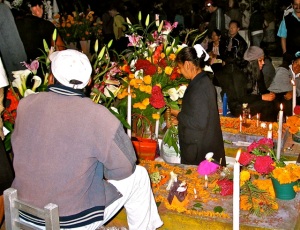
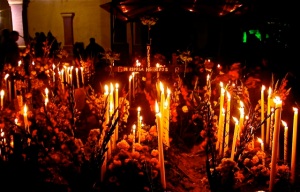
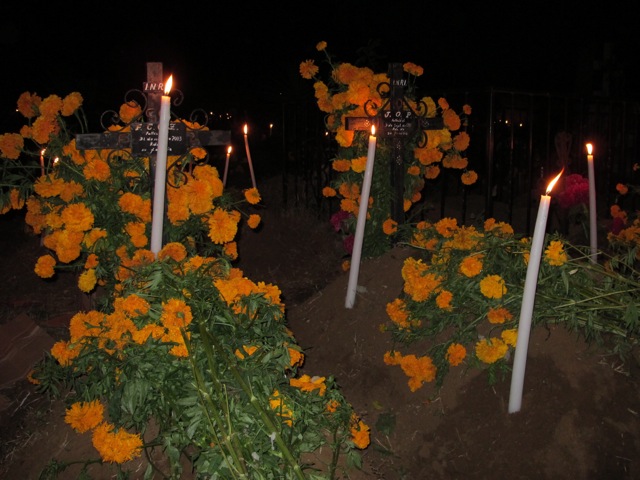
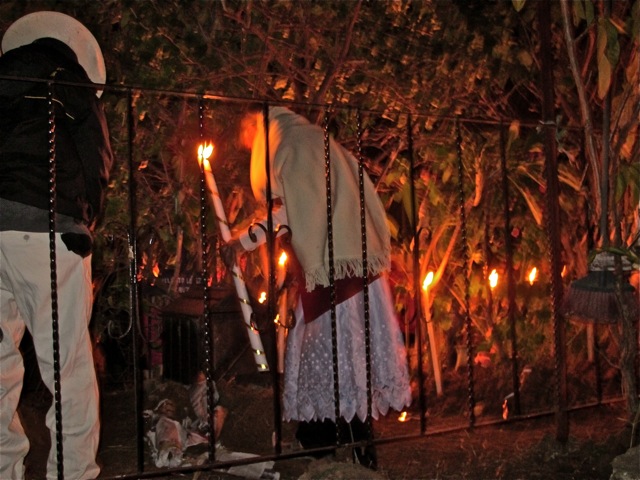
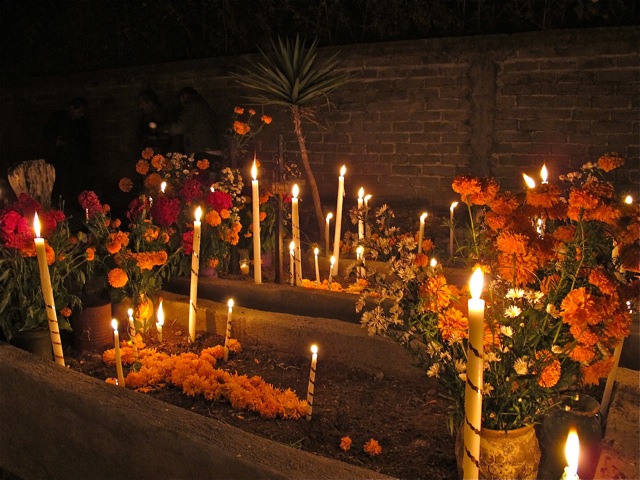
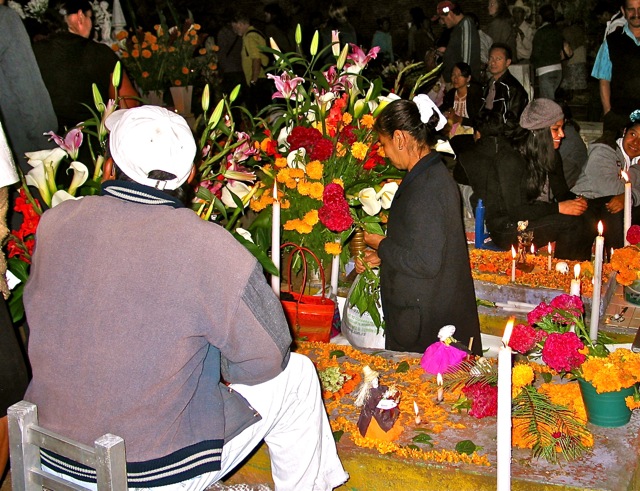
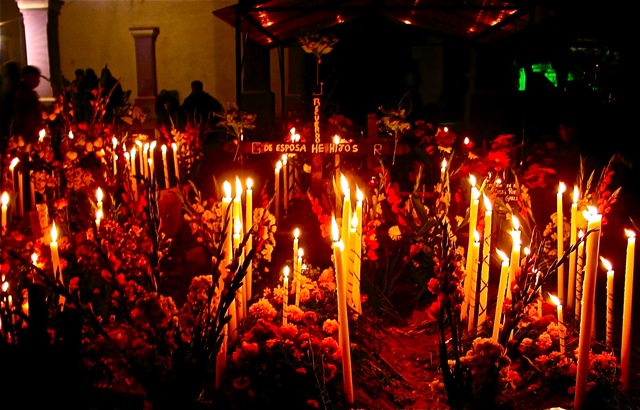
I plunged in. Heeding Laura’s advice to travel in groups of 3-4, I tagged along with a couple, chosen because he was at least 6 feet tall and I figured he would be easy to keep in eye range. The scene was like nothing I’ve ever seen before… a cornucopia of candles, by the thousands, flickering in the darkness; of color from the marigolds, cockscomb, and lilies; and of hundreds of families gathered around lopsided graves, drinking, sitting, laughing, and sharing in a ritual that recognizes that death is part of life. The scene was repeated at the new cemetery, before we stumbled our way back to the bus, which spirited us to the tiny pottery village of Atzompa and its panteón, well after midnight: Stage and dance floor, band playing, couples dancing, flowers, candles glowing in the darkness, families, few tourists, deeply personal, and magical… I felt like an intruder.
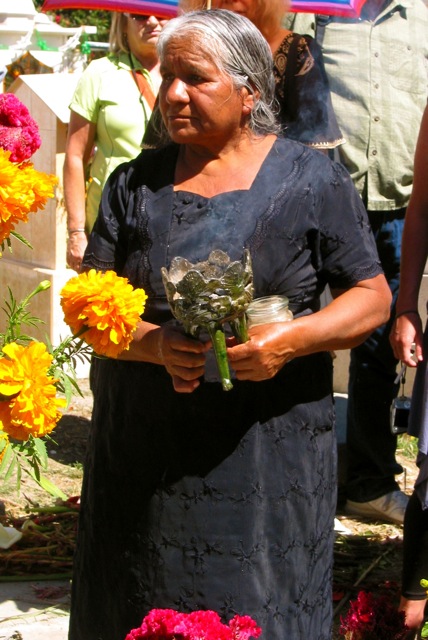
Though it was close to 1:30 AM when the bus dropped me off a block and a half from Casita Colibrí, I was up and back on the bus at 10 AM, for the ride to Mitla with Laura and our gang. We had the privilege of being guests of the García family, invited to participate in their Zapotec Day of the Dead traditions. We were welcomed to their home, a traditional family compound, with rooms surrounding an enormous dirt courtyard, with clotheslines holding newly dyed skeins of yarn (this is a family of weavers). Cervesas were offered, and then, in accordance with age-old custom, we followed the recently widowed family matriarch through the dusty streets to the Panteón Municipal. Here, holding the three-legged incense burner, the sweet and seductive smell of the burning copal perfuming the air, Doña Garcia performed a ceremony with words spoken in Zapotec.
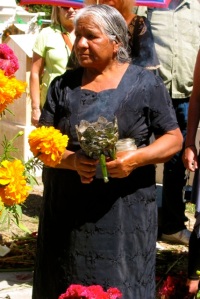
Mezcal and cigarettes were passed around. Joining the others, I drank the Mezcal and deposited my cigarette on the grave of the departed, where it joined several others — smoked and, like mine, un-smoked. With fireworks erupting periodically, we retraced our steps, following Doña Garcia and the smoke of the copal, as she brought the spirit of her late husband, Rutilio Garcia, back home to share the day with his family.
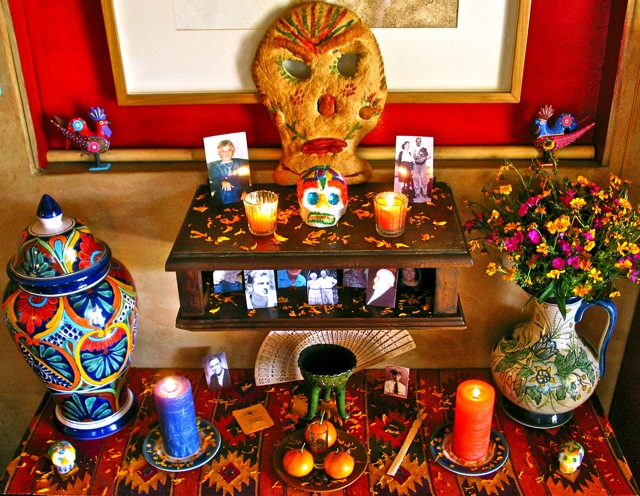
We returned to the lovingly assembled altar set-up by Doña Garcia. It was here, in front of this colorful altar, laden with flowers and food, including the intricately decorated pan de muertos that echoes the designs of the archeological ruins in Mitla, words were spoken in Zapotec and Spanish and tears traveled down many cheeks. Following this extremely moving ceremony, chairs were set up around several long tables where we joined the family in drinking Oaxacan hot chocolate, feasting on pan de muertos and mole negro, served, of course, with tortillas.
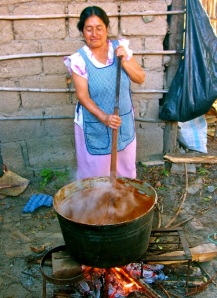
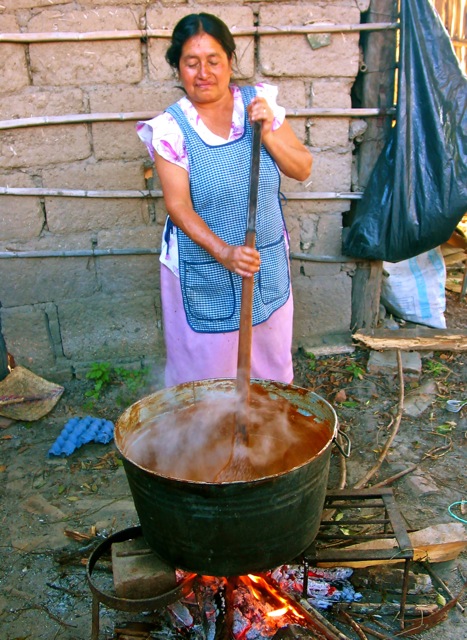
Satiated, it was probably a good thing that we were then led on a walking tour through this City of the Dead, to visit several other altars. Gracious families ushered our group through courtyards. At one, we paused to marvel at a woman, standing over an open fire (on this 80+ degree day), stirring a massive cauldron of mole,
We gathered in modest homes where families “introduced” their departed and proudly explained the significance of items on their altars. Hot, exhausted and deeply moved, a much quieter crowd returned to the García home. We were offered a final shot of mezcal, said our heartfelt thank-yous, and boarded the bus for the trip back to the city.
I returned home in time to watch my San Francisco Giants win their first World Series crown since 1954, when they were the New York Giants. After my initial hurrahs, my head couldn’t help but turn from the TV to my small Day of the Dead altar; where, along with photos of my parents, mother and father-in-law, and departed friends, my eyes settled in the center of the altar, to a photo of my grandparents.
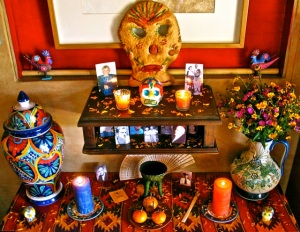
They had moved next door to my childhood home in Mill Valley about the same time the Giants moved to San Francisco, and it was then that Grandpa introduced me to baseball. We listened to Russ Hodges and Lon Simmons call the games and I put up a team photo (Willie Mays, Orlando Cepeda, Juan Marichal, Willie McCovey, Felipe Alou, Stu Miller, Mike McCormick, Jose Pagan, Jimmy Davenport, Hobie Landrith…) on the wall of my bedroom; grandfather and granddaughter cheering, agonizing, and bonding. I took my Giants cap off, walked over, and put it on the altar.
Read Full Post »










 Mexican Peso Converter

 View From Casita Colibrí