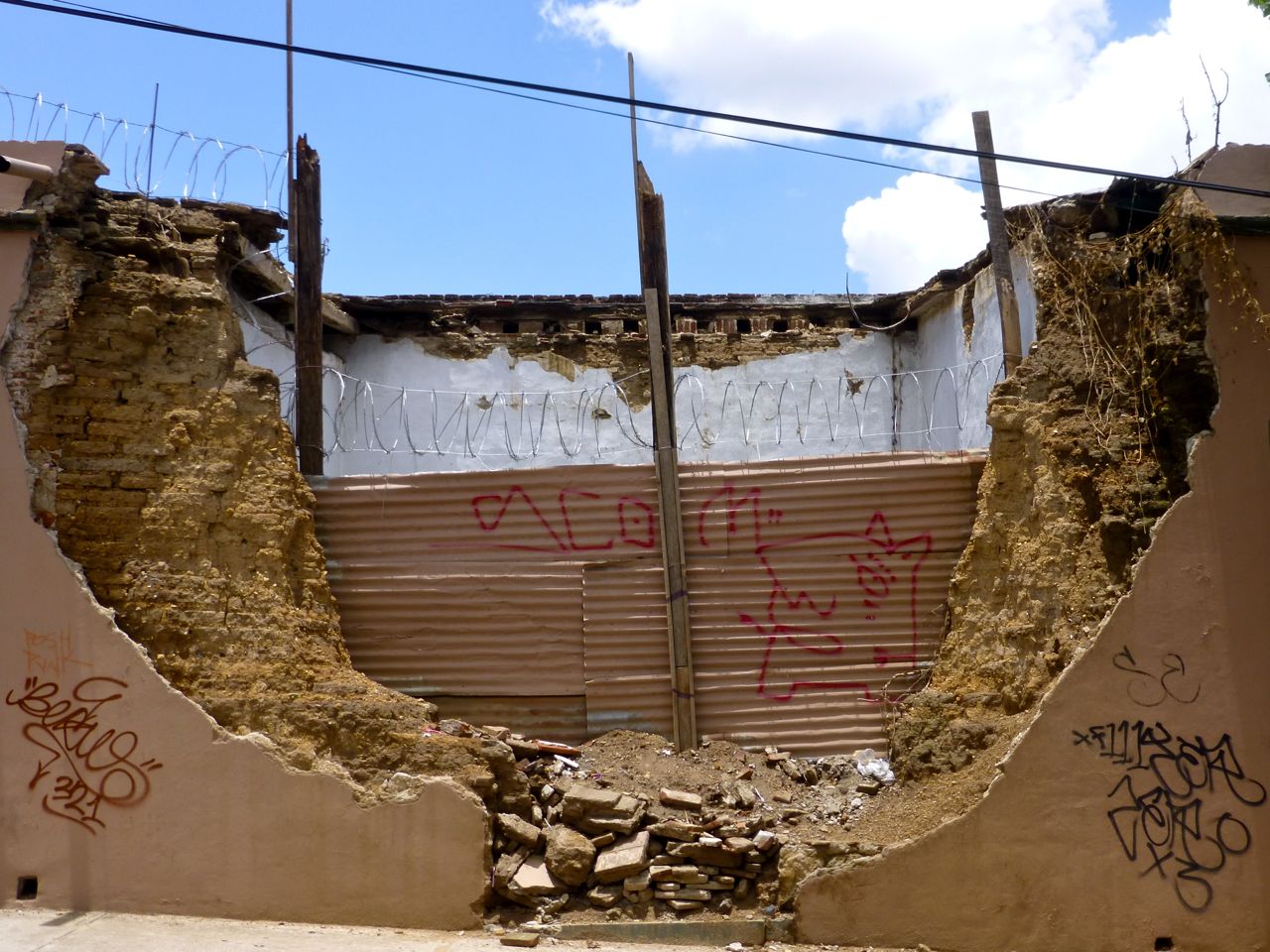
The “buildings in a bad state” in Oaxaca continue to multiply.

Where some see unsightly decay, others see opportunity…

including urban artist, SCOM.
Posted in Buildings, Creativity, Culture, Signs, Travel & Tourism, tagged abandoned buildings, artists, buildings, dangerous, Mexico, Oaxaca, photographs, photos, popular travel destinations, SCOM, street art, urban art graffiti, wall art on June 8, 2014| 6 Comments »
The “buildings in a bad state” in Oaxaca continue to multiply.
Where some see unsightly decay, others see opportunity…
including urban artist, SCOM.
Posted in Creativity, Culture, People, tagged Arnulfo Mendoza Ruíz, artists, death, funeral, Mexico, Oaxaca, photographs, photos, Teotitlán del Valle, weavers on March 10, 2014| 11 Comments »
Blog post as catharsis…
Saturday was a sad day in Oaxaca. It brought the completely unexpected death of one of Oaxaca’s most talented artists, Arnulfo Mendoza Ruiz. He was only 59. I knew him a little, peripherally through my blogger buddy, Chris, who has known him and his large Zapotec family in Teotitlán del Valle (his sisters are well-known chefs) for many years and with whom he had been collaborating on a project. Arnulfo had a well-known store and workshop called La Mano Mágica on the walking street here in Oaxaca, which showcased, not only his artistry (paintings, exquisite weavings, metal work, and more), but also the cream of Oaxaca’s artesanía and artist community. We would occasionally stop by or he would hail us from the doorway — always with twinkling eyes, mischievous smile, and well-worn fedora atop his head.

Today, the doors are closed.
As I’ve mentioned several times before, ritual and tradition play central roles in all aspects of Zapotec culture and it was amazing to watch it being expressed on Saturday. Arnulfo died in the morning and by the early afternoon, friends, family, and many of the major artists in Oaxaca, were gathered in La Mano Mágica. At one point, there was mournful chanting by several men in the gallery where his casket lay, later a band played, people came and went in the main workshop room, and in the room behind, his sisters prepared and served chicken covered in black mole, rice, tortillas, and atole. The women busied themselves with the ritual of preparing and offering food, but allowed the tears to well up when condolences were given. However, the men in the family sat or stood in clusters in the other two rooms, and remained stoic.
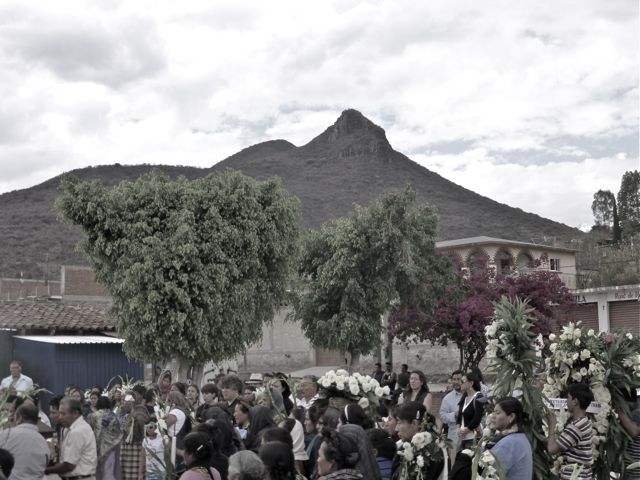
Under the embrace of El Picacho
According to belief, the funeral was held the next day. As we drove out to Teotitlán del Valle on Sunday, the winter sky’s usual puffy white clouds had turned dark and gray and a few tear drops fell from the heavens. There is a tradition of dimming the lights on Broadway to honor the death of a prominent member of the theatrical community. And, yesterday, it felt like Mother Nature desaturated the color of Oaxaca a little in honor of Arnulfo Mendoza Ruiz.

Led by the solemn sounds of a band, pallbearers carried the casket from his home high atop a hill in Teotitlán del Valle, down the steep and winding cobblestone streets, to Templo de la Preciosa Sangre de Cristo where a mass was celebrated. And then, all processed to the cemetery. The anguished sobs, as his body was lowered into the earth, were heart-wrenching. Like laughter, I think grief is contagious, as it reaches into our heart, takes hold, and shakes the continuum of feeling in each of us. And so, tears welled-up in my eyes.
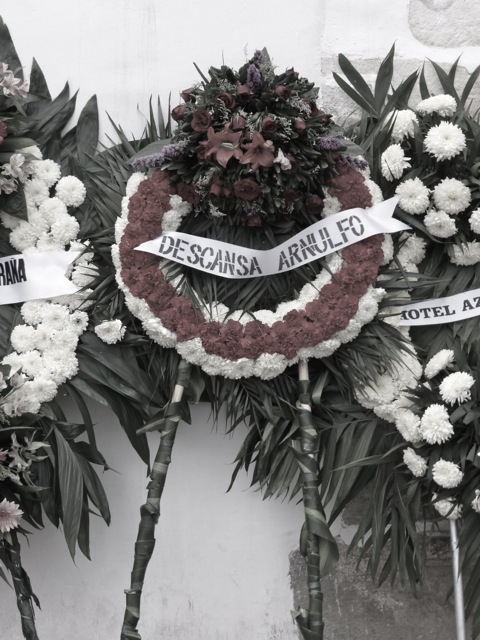
Rest in peace, Arnulfo
Today, I continue to feel drained and very sad. I didn’t know Arnulfo well, but feel humbled by the fragility of physical life. I keep reflecting on how each of us tries to bring meaning to this temporal physical existence. Arnulfo was a flawed man and was chased by demons, but in his creativity and nurturing of the arts, he left the world a little better than he found it.
Chris’s farewell blog posts to his friend are especially touching: A sad day – Arnulfo Mendoza (1954-2014) and Another sad day – Arnulfo Mendoza (1954-2014).
And, here are two online obituaries (in Spanish): Adiós a Arnulfo Mendoza and Oaxaca de luto por la muerte de Arnulfo Mendoza.
Posted in Creativity, Culture, Exhibitions, Immigration, People, tagged 2501 Migrants, Alejandro Santiago Ramírez, art, artists, La Ruta del Migrante, Mexico, Oaxaca, photographs, photos, San Pedro Teococuilco on July 23, 2013| 6 Comments »
Yesterday, in the midst of Guelaguetza festivities, Oaxaca learned of the death of one of her beloved artists. A sculpture and painter, Alejandro Santiago was only 49 years old when he succumbed to a massive hear attack.
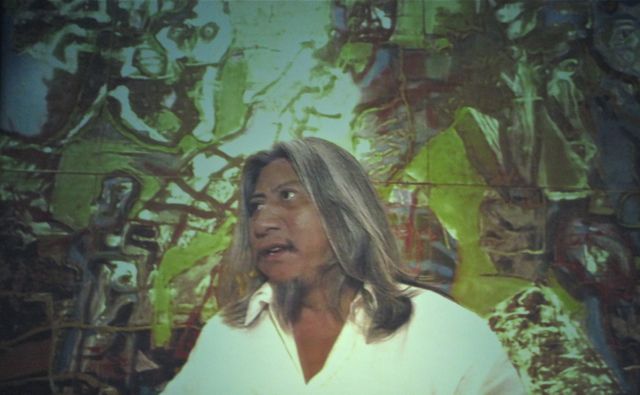
Image of Alejandro Santiago projected on the screen at today’s Homage
Perhaps his most important work resulted from a return to the Zapotec village of his birth, San Pedro Teococuilco, after many years away. He was moved by the large numbers of men and women who had left, leaving it almost deserted. Inspired and feeling the need to make a statement about what had happened to his pueblo, and countless others in Mexico, he created a massive exhibition of 2501 sculptures, an homage to those who had left, plus one — those who are yet to make the journey northward.
One of his 2501 Migrants from a 2012 exhibit along Macedonio Alcalá,
There was an Homage to Maestro Alejandro Santiago this morning at the Teatro Macedonio Alcalá.

Casket of Alejandro Santiago on the stage of Teatro Macedonio Alcalá
And, according to Think Mexican, there will be a memorial “in the coming days at La Calera.”
For more photos from the 2501 Migrants exhibit, see my blog post The path of the migrant.
Update: Valerie J. Nelson has written a lengthy tribute to Alejandro Santiago for the Los Angeles Times.
RIP, Maestro.
Posted in Creativity, Culture, People, Travel & Tourism, tagged art, artists, Gorilla Gallery, graffiti artists, Mexico, murals, Oaxaca, photographs, photos, Sanez, street art, urban art on June 10, 2013| 4 Comments »
One can see his art all over the city. I’d first been wowed by the scale, symbolism, and style of his work early last year, when walking up Matamoros to meet a friend who was staying at Hotel Azucenas. At Calle Prof. M. Aranda, I was stopped dead in my tracks — the entire front of the building next to the hotel had been transformed. Using a roller, not brush or spray can, the artist known as Sanez turned it into a work of art.


In September 2012, Sanez again worked his magic on this tired old building — this time creating “El Canto del Agua” (The Song of Water). According to the article, Mesoamerican Peoples Express their Solidarity by Jonathan Treat, using “symbols of the Aztec god of rain, fertility and water—Tláloc, and corn, forests, animals, campesinos and campesinos and traditional Oaxaca fiestas… Sánez honors indigenous peoples struggling to defend their territories: [The mural is] ‘Dedicated to the peoples who organize to defend their commons and the common good—Mexico and Canada.’”


Another close encounter with the work of Sanez occurred last month when I ventured across Republica into Barrio de Jalatlaco. Besides its un-city-like tranquility and quaint tree-lined, but treacherous, cobblestone streets, this bucolic neighborhood always has great street art. However, I didn’t expect to find the restaurant, Fuego y Sazón, playing host to the unmistakeable style of Sanez. Wow!


And then… Just a few days before this current trip to California, I was at Gorilla Gallery (Crespo 213) talking to Jason Pfohl (glass artist and guiding spirit behind Gorilla Glass) when Sanez came in. He came to discuss plans for his live painting on glass event at the gallery. Alas, I was already in the US on May 31, when it occurred. However, if you are currently in Oaxaca, you can see the finished piece at the gallery on Thursdays between 2 and 8 PM. Besides the immense glass canvas, the gallery is featuring prints by Sanez — and I’m sure Jason would be happy to discuss the distinctive tattoo work of Sanez.
In addition, you might want to slow down when driving along Constituyentes behind Mercado de Abastos — that giant billboard mural towering above the weeds and refuse is another of Sanez’s masterpieces.
Posted in Creativity, Culture, Exhibitions, People, tagged art, artists, arts, exhibitions, Juan Alcázar Méndez, mexican consulate in san francisco, Mexico, Oaxaca, photographs, photos, San Francisco, The Magic Surrealists of Oaxaca on February 8, 2013| Leave a Comment »
Oaxaca is mourning the loss of painter, Juan Alcázar Méndez, who succumbed to complications related to diabetes yesterday.

Juan Alcázar Méndez. Photo from Consejo Nacional para la Cultura y las Artes
Alcázar was born in Guadalupe Etla, Oaxaca in 1955 and entered the School of Fine Arts at the University Benito Juarez of Oaxaca at the age of 13. He became known for his unique magic realism style.

Painting from fundraising auction by the Oaxaca Lending Library, 2010
He was the founder of the Taller Rufino Tamayo, el Taller de Gráfica en la Casa de la Cultura, and the Taller Libre de Gráfica Oaxaqueña. He was also one of the artists exhibited in the The Magic Surrealists of Oaxaca show at the Mexican Consulate in San Francisco in 2012.

“El Rapto” from the The Magic Surrealists of Oaxaca exhibition 2012, San Francisco, CA.
RIP, Juan Alcázar Méndez. You will be missed but your magic will live on.
Posted in Creativity, Culture, Parks & Plazas, Travel & Tourism, tagged artists, arts, graffiti, Mexico, Oaxaca, photographs, photos, popular travel destinations, street art, urban art, wall art on January 21, 2013| 2 Comments »
The packing begins — this is “big move” week. In the meantime, a little more graffiti…


… from under the fútbol (soccer) stadium.
Posted in Creativity, Culture, Parks & Plazas, Travel & Tourism, tagged art, artists, arts, graffiti, graffiti artists, Mexico, Oaxaca, photographs, photos, PINK, popular travel destinations, street art, wall art on December 16, 2012| 2 Comments »
Yesterday was just what the doctor ordered. On a long walk with best friend: a quinceañera, Christmas piñatas, a wedding, chickens roasting, and fanciful graffiti under the fútbol (soccer) stadium… these with a decidedly feminine touch. Love the incongruity!


An interview with one of Oaxaca’s female graffiti artists, PINK, can be found here (in English and Spanish).


 Mexican Peso Converter
 View From Casita Colibrí