Feeds:
Posts
Comments

Archive for the ‘Beverages’ Category

Yesterday was the fourth Friday of Lent and, if you are in Oaxaca, that means Día de la Samaritana, where, believer or not, you will be offered aguas from doorways and street-side tables set up in front of churches, restaurants, hotels, government agencies, and private homes.

P1070368 (1)

I got a late start; unseasonable rain was threatening and the grey sky had made it hard to leave my cozy apartment. 

P1070372

But, what can I say?  Horchata, sandia, guayaba, coco, chilacayota, chía con limón, and even tejate and nieves were offered with smiles, free of charge, to all passersby.

P1070348

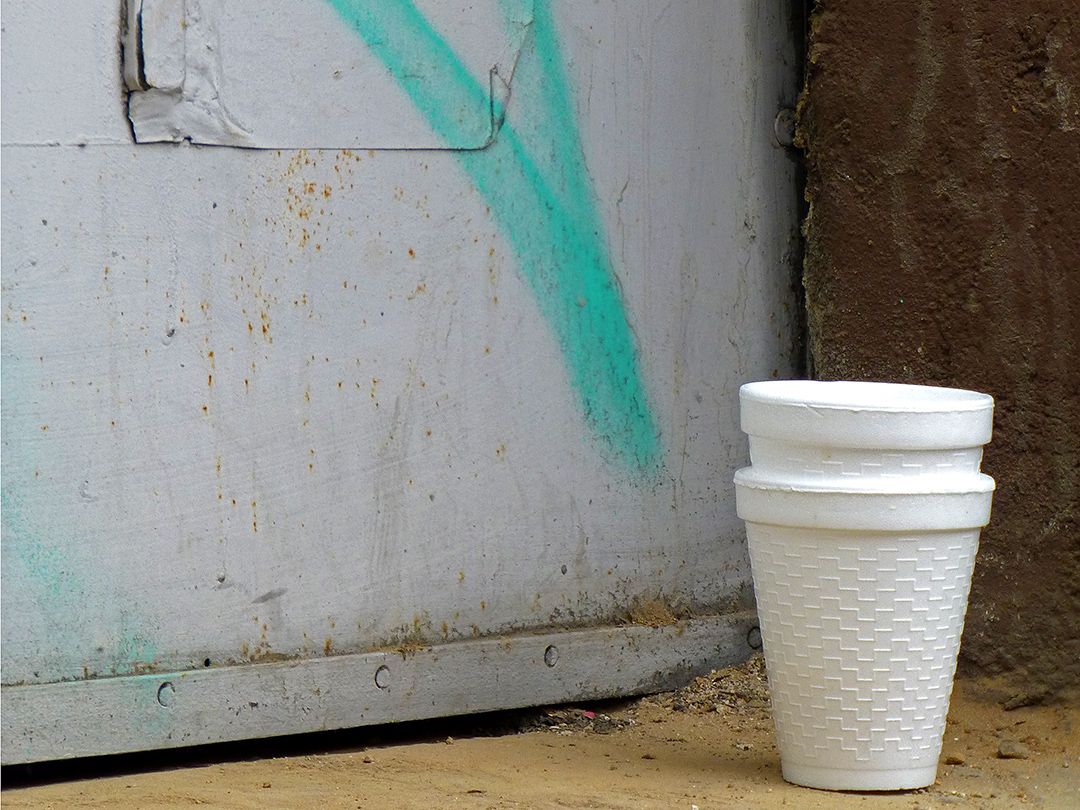
Within a block, I happily and gratefully accepted a large plastic cup of horchata; another one followed, and later, a styrofoam cup of chilacayota.

P1070385

It had begun at noon, but by 2 PM, all that remained were branches of Bougainvillea, empty ollas (pots), ladles with nothing to dip into…

P1070392

and empty cups.

Read Full Post »

If you are in Oaxaca and it’s the fourth Friday of Lent, it must be Día de la Samaritana (AKA, el Día de las Aguas) — a uniquely Oaxacan celebration.  It is inspired by the Gospel of John story in the New Testament:  At noon, a tired and, apparently, thirsty Jesus, on his way to Galilee, asks a Samaritan woman at Jacob’s Well in Sychar for some water.  His request was highly unusual because, according to the Old Testament, “Jews regarded the Samaritans as foreigners and their attitude was often hostile.”  The woman complied with his request and the rest is history.

By noon, this past Friday in Oaxaca, the thermometer had already reached 90º F in El Centro Histórico and people of all ages, from small children to abuelos, were already lined up at bougainvilla and palm decorated booths in front of churches, schools, and businesses for the traditional Día de la Samaritana free aguas.  It wasn’t just plain water they were waiting on, it was for divinely flavored aguas frescas made with fresh fruits and flowers — jamaica, horchata, chilacayota, tamarindo, sandia, and others.  However in front of the churches, prior to the offering of aguas, there was a reenactment of Jesus and the Samaritana, as well as a priestly blessing — and an article in Noticias reported that, given the blazing hot sun, some in the crowd became a little impatient.

This slideshow requires JavaScript.

All were eventually served and the streets were filled with smiling people drinking a rainbow of aguas.  Within an hour the serving pots, pitchers, bowls, and buckets were empty and all that remained were garbage containers filled to overflowing with plastic cups.

By the way, talking to my friend Sam, who teaches at Universidad José Vasconcelos de Oaxaca, they had an aguas frescas contest — memorable combinations of watermelon with strawberries and lime; atole with tuna nieve; and coconut with strawberries.  However, I was informed the day’s winner was the piña colada — alas, minus the rum, I’m thinking.

Read Full Post »

As a current article says, mezcal seems to have wormed (oh, that’s bad!) its way into the hearts, minds, and media of el norte.  And, all I can say is, it’s about time!  I’m not really much of a drinker; mostly just wine with dinner, the occasional beer on a hot day, and a mixed drink a couple of times a year.  However, I have to say, mezcal has been a pleasant surprise.  The smoky complexity is quite a treat, especially if one ventures beyond the mass-produced brands and into the artisanal varieties.

Here in Oaxaca, mezcal is offered to welcome visitors, served at celebrations of all kinds, plays a role in most traditional ceremonies, and audiences always enthusiastically join in when Lila Downs sings, Mezcalito.  Oaxaqueño families have been harvesting agaves and hand crafting mezcal for generations.  The following photos are from an afternoon spent at one such palenque in San Baltazar Chichicapa(m).

Agave piñas (hearts) are stripped of leaves & roots and placed in a large outdoor pit oven.

P1060398_2

They are covered with agave leaves, fiber, mats and dirt and cooked over red-hot rocks for three to four days.

P1060400

The roasted agave is crushed with a gigantic stone wheel pulled by a horse.

P1060415_2

The roasted and mashed agave is then placed in large wooded vats to ferment.

P1060413_2

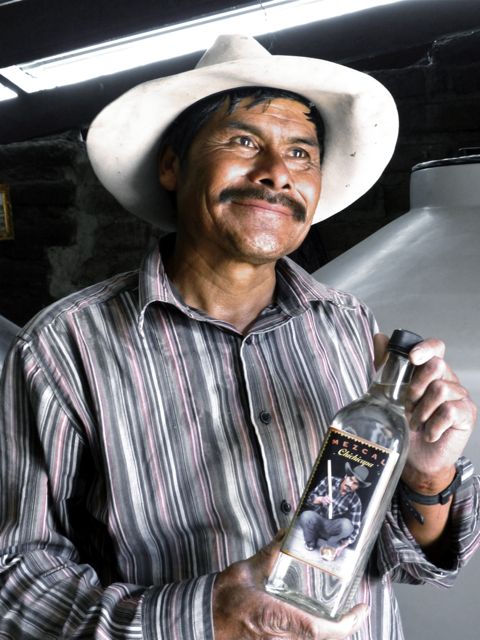
The liquid is extracted and twice distilled.  Next it is either bottled, if it is to be sold as blanco (aka, joven), or placed in barrels to age.  Reposado is aged for less than a year and añejo is aged from one to twelve years.  Needless to say, I returned home with my 4 L plastic gas can (no, it had never been used for gas!) filled with reposado made by our host and master mezcalero, Faustino.

P1060432

As the old Oaxaqueño saying goes, “For everything bad, drink mezcal and for everything good, you also should!”

And, please note:  This is a drink to be savored not chugged!

Read Full Post »

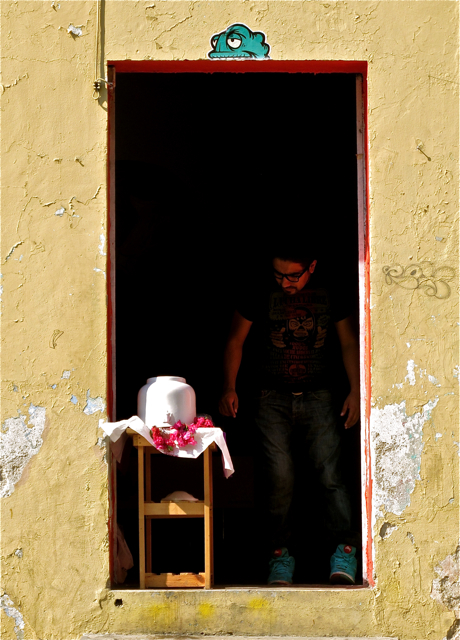
You know Semana Santa is on the horizon when tables, large and small, elaborately or minimally decorated, miraculously appear in doorways, street corners, and the Alcalá.  The common denominator is smiling people offering Agua de Jamaica, Horchata, Chilacayota, and even nieves to all passers-by.  Día de la Samaritana (Good Samaritan Day) is an only-in-Oaxaca, 4th Friday of Lent, event.

This year, besides experiencing the joyous mob scene on the Alcalá and the small sidewalk stands on side streets, on a tip from a friend, I made the “taking your life in your hands” crossing of Calzado de la República to the picturesque cobblestoned neighborhood of Jalatlaco.  Tables of aguas and nieves lined the plaza in front of the Templo de San Matías Jalatlaco and pastor Víctor Hernández was recounting the Biblical story, found in the Book of John, of the woman at the well who offered water to Jesus — the inspiration for Día de la Samaritana.  He concluded the story and blessing with the word “¡ataque!” and the masses did, indeed, attack the tables!  By the way, pastor Hernández gets around — he was the same priest who performs the yearly blessing of the animals across town at the Templo de Nuestra Señora de la Merced.

It was a hot day and having already had two aguas, as I made my way over to Jalatlaco, I was jonesing for a nieve but, alas, by the time I figured out which table was serving it, the line was too long.  So, giving up on the nieve, I accepted another agua and headed towards home.  However, in the true spirit of the day, as I was melting in the heat, an older gentleman standing on the sidewalk asked if I would like a nieve and gestured toward a woman standing in the doorway behind a small table.  “Sí” I replied and a styrofoam coffee cup filled with Leche Quemada (my favorite) was thrust into my hand.  Another sublime day in Oaxaca…

Read Full Post »

Besides mushrooms, tejate, tamales, and mole, there is cheese and mezcal… and last Monday I hopped in a colectivo bound for Etla; my destination was Reyes Etla (about 20 km. from the city) for the 2nd annual Queso y Quesillo Expo Feria.  Oaxaca is known all over Mexico for its cheese and, without a doubt, the best comes from the municipalities around Etla — and Oaxaca’s department of tourism is on a mission to promote its position globally.

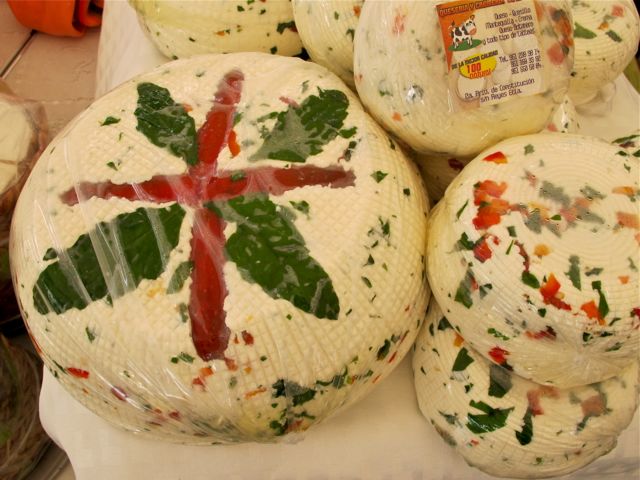
Ball of cheese decorated with basil leaves and red bell pepper strips.

Vendors tempted with artistic displays and tastings of, among others, queso fresco, queso crema, and quesillo.  Yummm….  It is a dark day around Casita Colibrí when there isn’t a ball of quesillo in the refrigerator.

Display of cheeses with woman vendor behind counter

FYI:  Quesillo (aka:  Oaxacan string cheese) was first made in Reyes Etla in 1884 — supposedly by mistake!  According to one legend, a young girl from Reyes Etla disobeyed her mother and allowed the cheese curds to expand into a spongy mass.  She attempted to correct her mistake by pouring boiling water over the curds, then she kneaded it and pulled it into the first strip of what is now known as quesillo.

Woman vendor wearing mask behind display of quesillo
And, now, we turn to the 15th annual Feria Internacional del Mezcal…  After years of languishing in tequila’s shadow, being considered a “poor relation” — that is, if it was considered at all — mezcal’s profile has risen dramatically in the past several years.

XV feria internacional del mezcal oaxaca 2012

In August 2010, none other than Eric Asimov wrote about, Mezcal, Tequila’s Smoky, Spicy Cousin in the New York Times.  A year later, a NYT ‘s article advised, Move Over, Tequila, It’s Mescal’s Turn to Shine.  (You say mescal, I say mezcal.)

And, sheesh, I was flipping channels the other night and stumbled on Tim and Tim in Oaxaca, being instructed on the art of making mezcal by my landlord, on an episode of the TV program ROAM!  Then there is the No Reservations “Obsession” episode, where  Anthony Bourdain explores Ron Cooper’s obsession with mezcal.

Back to the feria, where over 40 vendors displayed their wares…

Bottles of mezcal lined up in two shelves of a display

poured generous tasting shots…

3 guys behind counter offering shots of mezcal

and sold their mezcals.

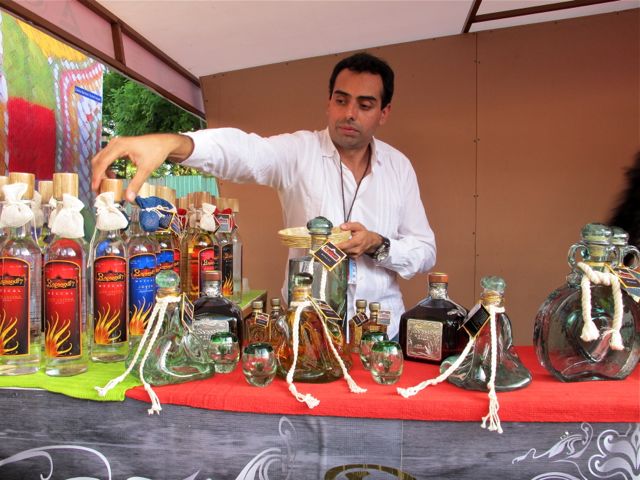
.Male vendor reaching for a bottle of mezcal

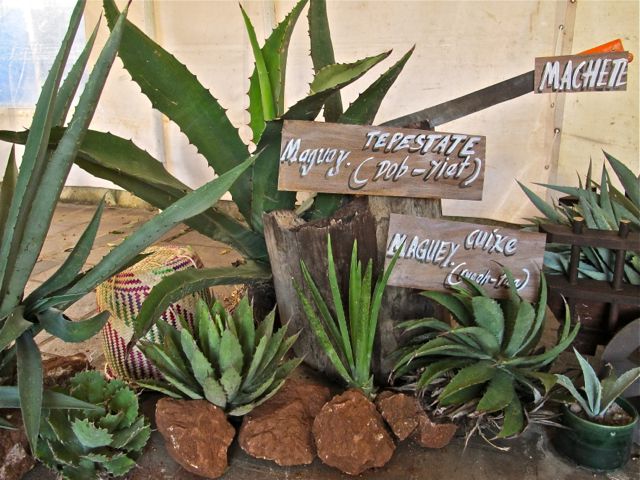
In addition, there was an exhibit showing the various types of maguey, from which mezcal is made…

Variety of agave plants with labels.

and the equipment used and processes they undergo to become this smoky and complex distilled spirit.

A mezcal still

As the old Oaxaqueño saying goes, “For everything bad, drink mezcal, and for everything good, you also should.”

Read Full Post »

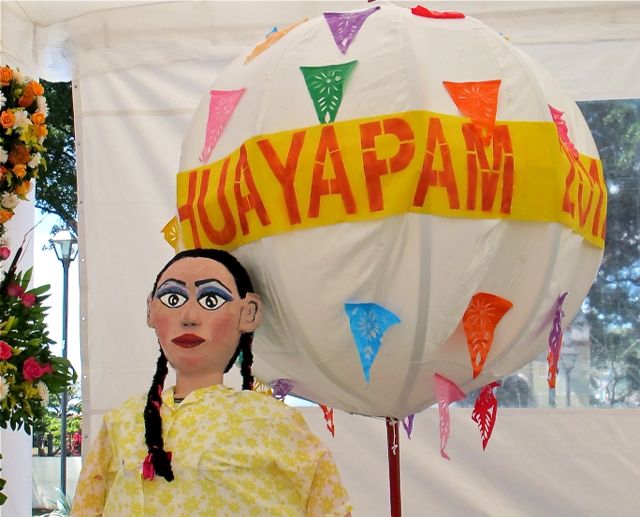
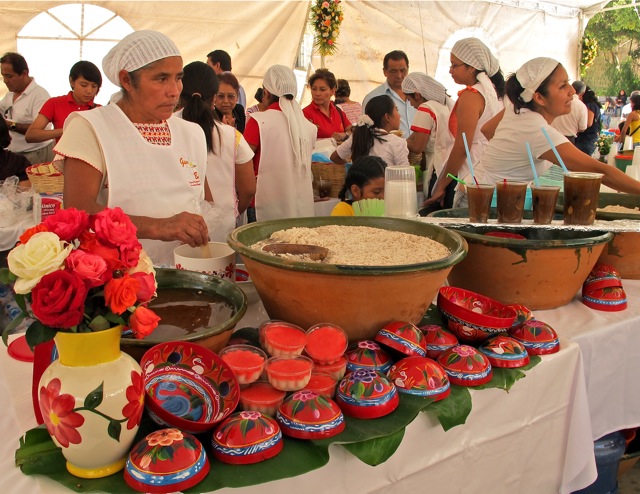
Oaxaca is a foodie paradise, in major part, because much of its cuisine draws on and honors its pre-Hispanic roots.  And, right now, during this time of Guelaguetza, various food and beverage ferias and festivals are also happening throughout the city and central valleys of Oaxaca.  Today, on the Plaza de la Danza, the Feria del Tejate y el Tamal, celebrating these specialties of San Andrés Huayapam, opened with the usual fanfare — music, monos, a marmota, and speeches.
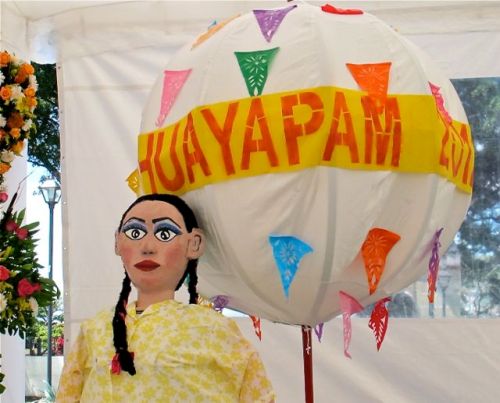
Mono and marmota with "Huayapam" printed around it.

Present were a number of local dignitaries, including Evelyn Acosta López, the recently elected corn goddess, la Diosa Centéotl 2012, who presides over the Guelaguetza.
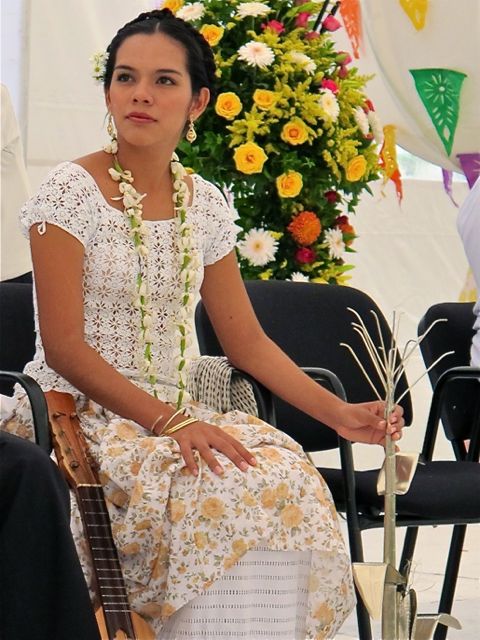
Evelin Acosta López seated.

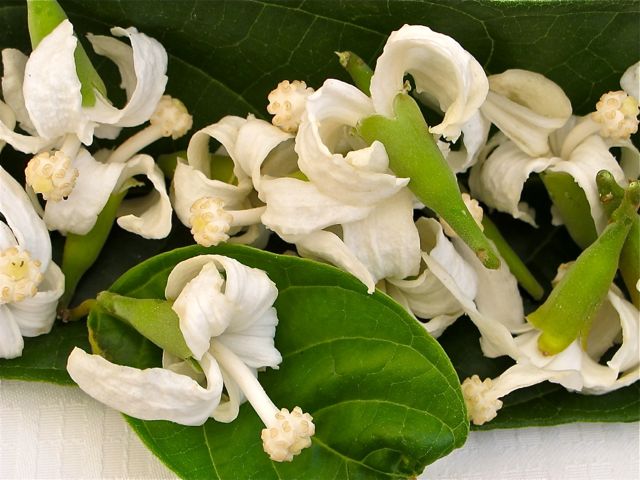
Tejate is a foamy, refreshing, and nutritious non-alcoholic pre-Columbian beverage made from Nixtamal corn, mixed with tree ash, and toasted cacao beans, mamey seeds, and Rosita de Cacao flowers.
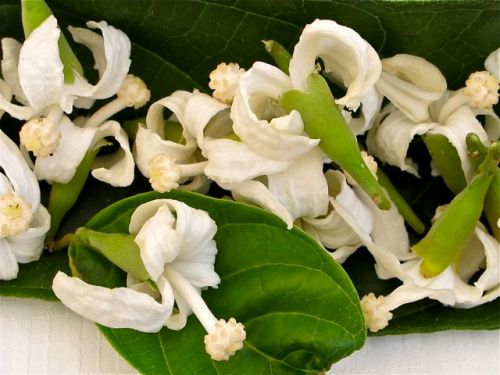
Rosita de Cacao blossoms.

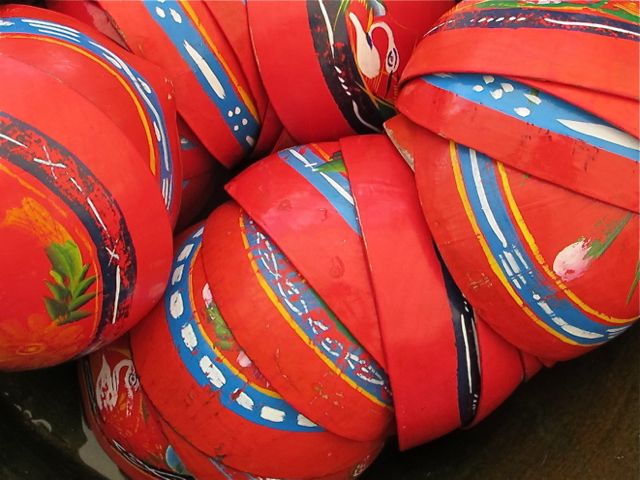
One frequently sees tejate, served in these colorfully painted gourds, in the mercados of Oaxaca, at festivals, and street side stands.
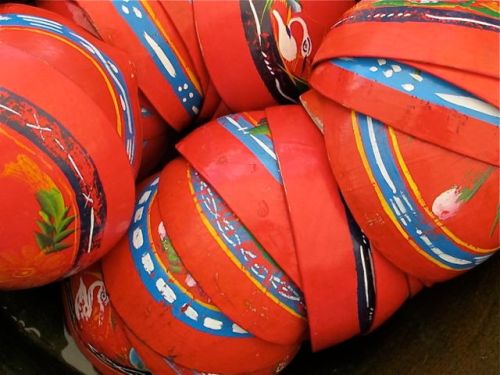
Dried and hollowed-out gourds painted red with blue, yellow, and green decoration.

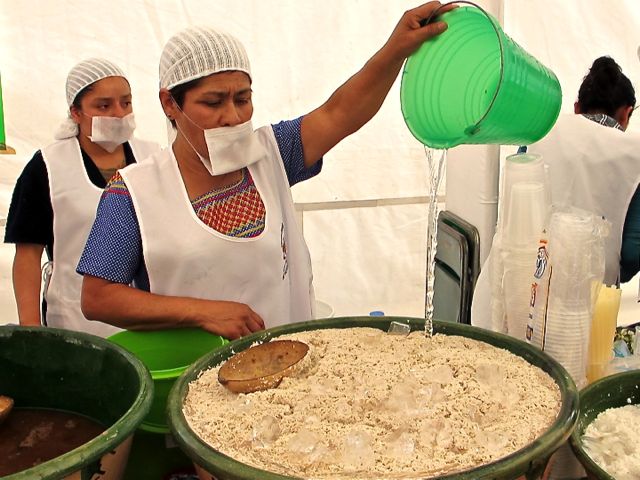
And, yes, it is safe to drink.  The water and ice that are added…
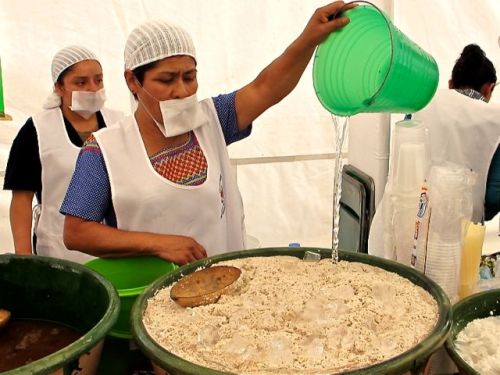
Woman with surgical mask pouring water from bucket into large pot of tejate

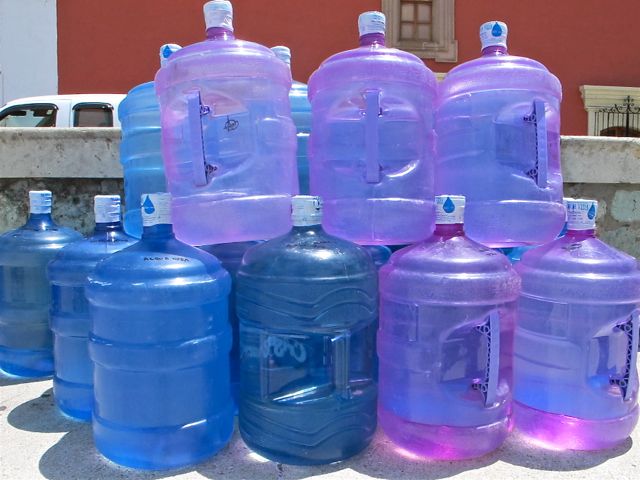
come from garrafons of “pure” water.

Stack of garafons (jugs) of pure water.

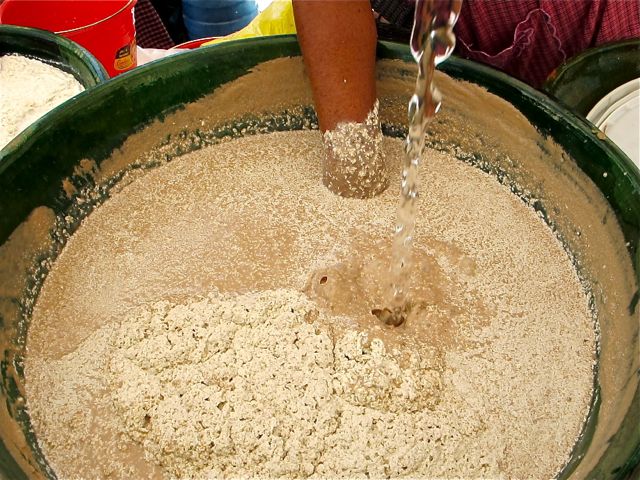
And, please, don’t be put off by the women, up to their elbows, mixing the ingredients.  Just think about it…  Chefs often use their hands when preparing food and arms are generally much cleaner than hands!  Believe me, these women take great pride in their expertise and product.
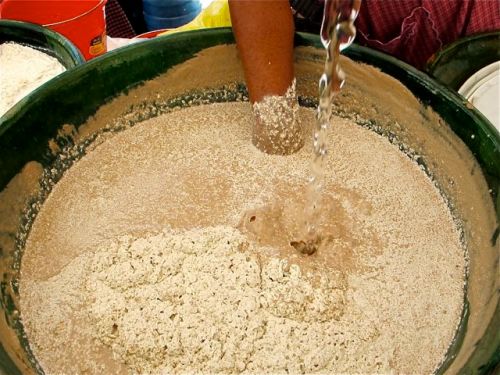
Hand and lower arm mixing tejate as water is added

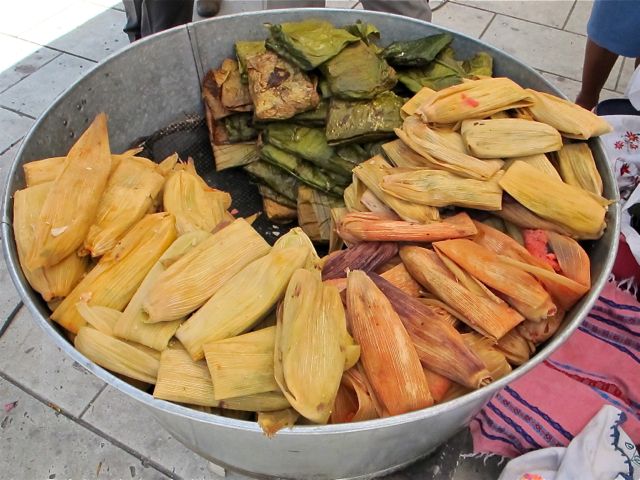
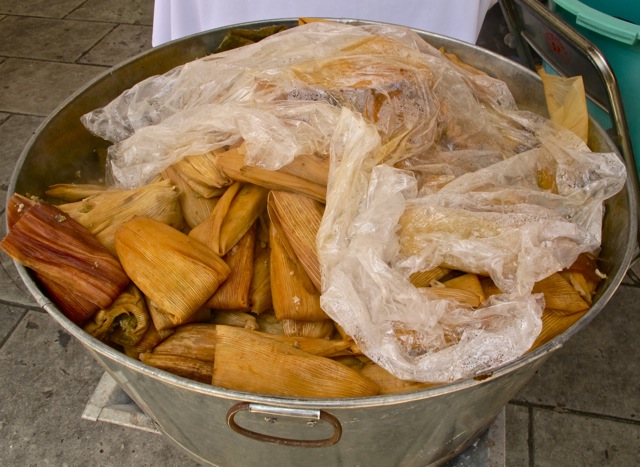
Oh, right, there were also tamales!  Once I finished taking photos and drinking a tall cup of tejate, I made my day’s tamal purchase; chepil, chichilo, and mole.  Tomorrow, I will be returning for more.
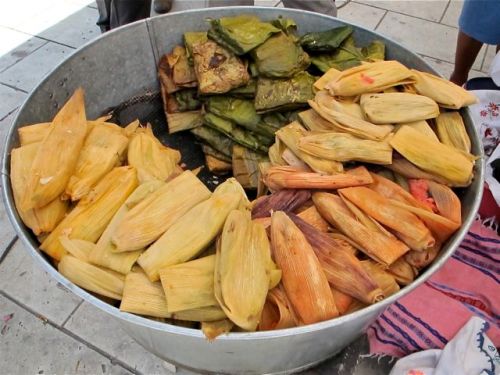
Large galvanized aluminum bucket filled with a variety of tamales wrapped in corn husks and banana leaves.s

The Feria del Tejate y el Tamal runs today and tomorrow at the Plaza de la Danza, then moves up to San Andrés Huayapam for Saturday and Sunday.  You can find a little more information about the feria in last year’s blog post, Tejate and tamales.

And, sheesh, I still haven’t blogged about the cheese feria, mushroom feria, not to mention, the Feria Nacional del Mezcal — all of which I’ve attended during the past several days!

Read Full Post »
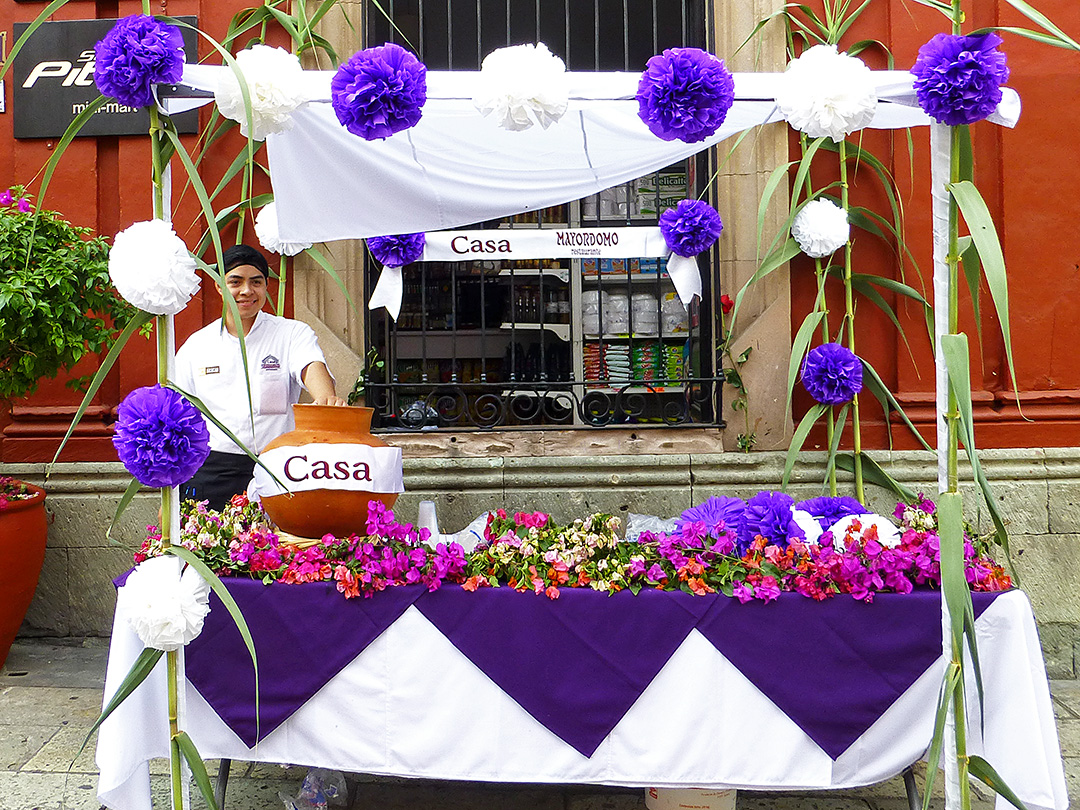
…and, Agua de Jamaica, Horchata, and Chilacayota to drink!  Yesterday, the 4th Friday of Lent, was Día de la Samaritana (Good Samaritan Day), an only in Oaxaca tradition.

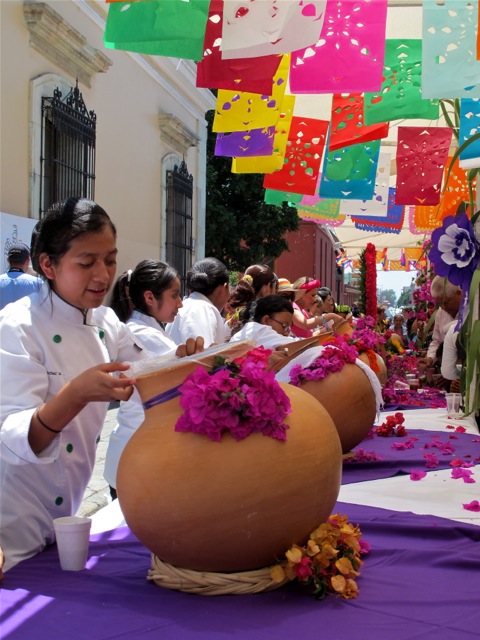
Palm fronds hanging above; purple and multicolored garlands.

Inspired by the Biblical story, in the Book of John, of the woman at the well who offered water to Jesus, long tables and small stands laden with massive containers and plastic cups are set up on sidewalks throughout the city by schools, churches, and businesses.

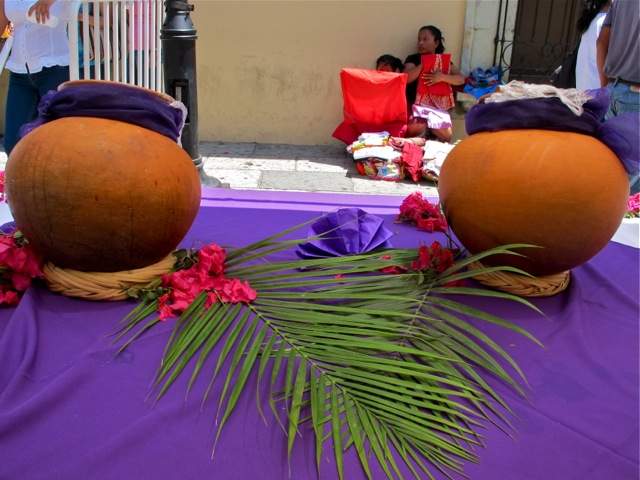
Clay pots and palm fronds on top of purple tablecloth

These “water stations” are decorated in purple, the color of Lent, symbolizing penance and royalty.

Women serving aguas from clay pots

Crowds rapidly gather and wait to be served the agua of their choice and, despite hours of standing, ladling, and replenishing, all are served with a gracious smile and genuine joy.

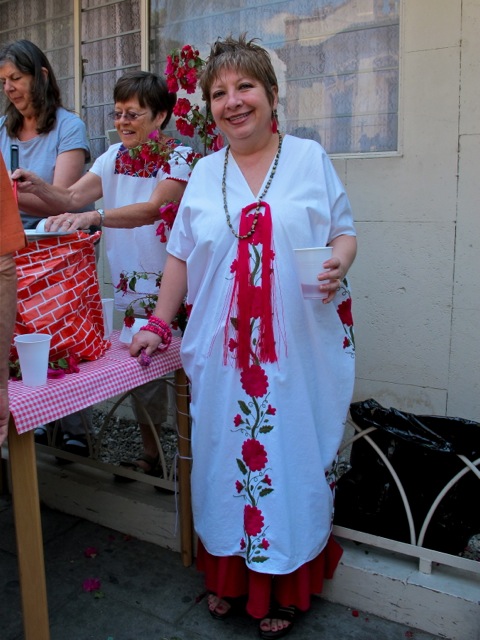
Women in long huipil standing next to her table of aguas.

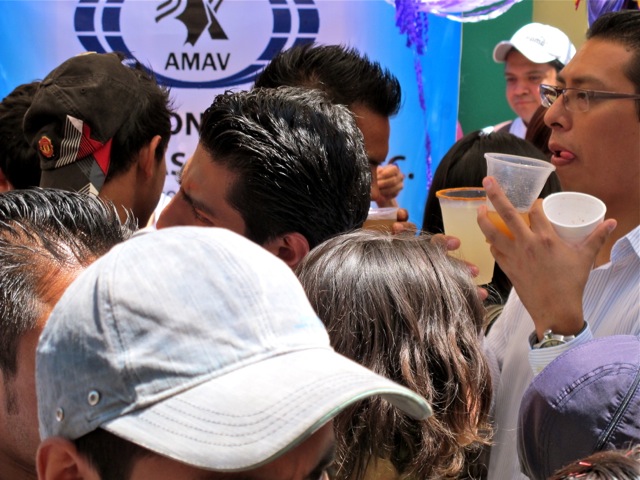
By early afternoon the Alcalá was a sea of people.

Crowd of heads and cups

This is definitely NOT a made for the tourist event.

Woman in indigenous dress serving an agua, man in foreground holding cup

This is Oaxaqueños practicing the sharing and hospitality that informs much of their culture.

Read Full Post »

And now we have the sixth annual Festival del Tejate y el Tamal de San Andrés Huayapam!  A large tent covers half of the Plaza de la Danza and over 100 “tejateras” who belong to the Unión de Mujeres Productoras del Tejate set up shop early this morning to sell refreshing cups of this pre-Hispanic beverage made from corn and cacao.

The festival is part of an effort to preserve the food culture of the Zapotec.  San Andrés Huayapam (aka, San Andrés Huayapan) is about 7 miles north of the city and its main economic activity is the sale of tejate.

Packages of tejate lined up on a table

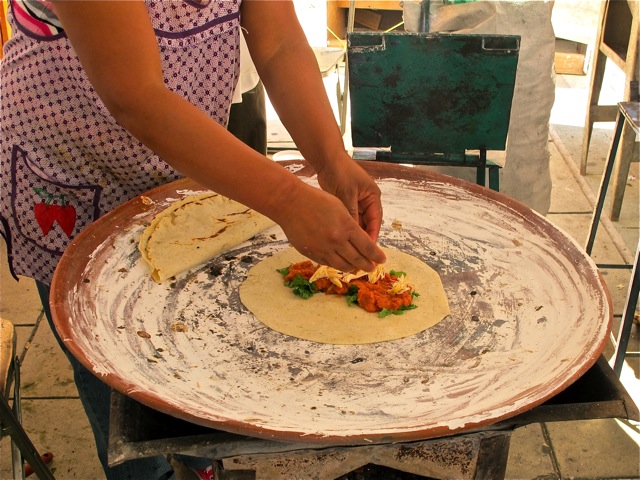
The festival also features empanadas, hot off the comal…

Empanada being cooked on a comal

and six kinds of tamales:  Salsa verde, Amarillo, Rajas, Verde, Chichilo, and Tamal de mole.A variety of tamales in a metal bucket

I wanted them all!  However, for today’s comida, I opted for chichilo from this gal…

Woman serving tamales

Why chichilo?  The answer is, because I’ve never had that kind before!  Chichilo is one of the seven moles of Oaxaca and is only served on special occasions, such as weddings and christenings, or when the crops have been harvested.  Chilhuacle negro, mulatto, and pasilla chiles; blackened tortillas and seeds of the chiles; and avocado leaves, the latter imparting a subtle anise flavor, give it its distinctive flavor.

Woman reaching into steaming hot cauldron of tamales

She picked out a good one… it was delicious!

People sitting and eating at long tables.

¡Buen provecho!

Read Full Post »

… and for everything good, you also should.”  — old Oaxaca saying.

Today, the XIV Feria Nacional del Mezcal opens in el Paseo Juárez el Llano.  Preparations were in full swing yesterday afternoon, when I walked passed Llano Park (as it is more commonly known).

Behind the back of Benito Juárez, carpenters were busy.

Carpenters building a booth in Llano Park next to statue of Benito Juárez

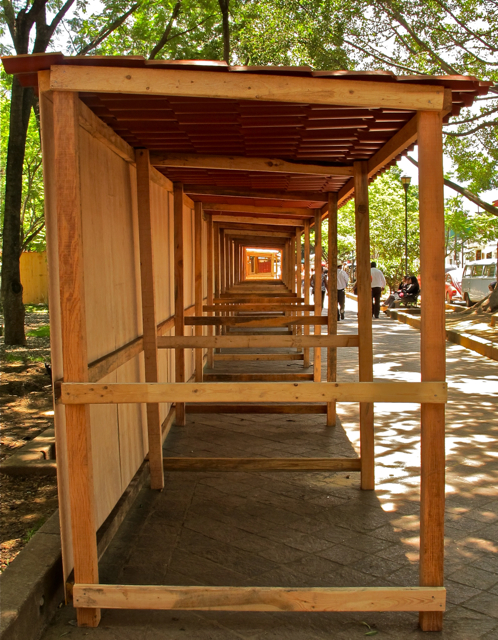
Newly constructed puestos lined the sidewalk on Pino Suarez, waiting to be filled with vendors and displays…

Empty booths along sidewalk
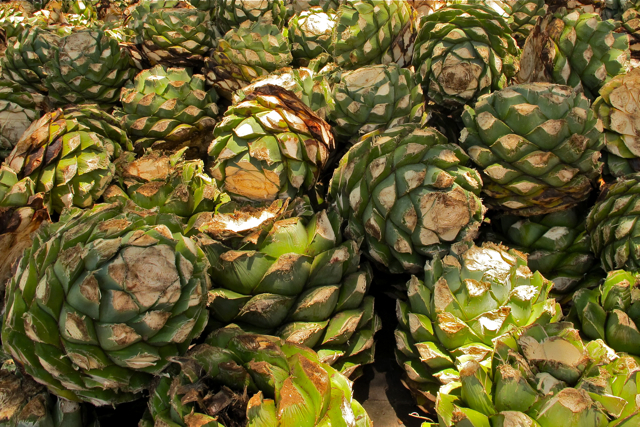
… and hearts of the maguey  (called piñas, because they look like pineapples) were piling up all around the park.

Pile of hearts of the maguey

For more information about mezcal, including how it differs from tequila, see:

In the meantime… “¡Arriba, abajo, al centro y pa’ dentro!”

Update:  Posters, website, and other publicity to the contrary, the feria did not begin today.   Mañana is the word!

Read Full Post »

Today, the fourth Friday of Lent, is Día de la Samaritana, also known as el Día de las Aguas, and a uniquely Oaxacan celebration.  It is inspired by the Biblical story of the woman at the well who offered water to Jesus.  And so, here in Oaxaca churches, schools, and businesses offer passersby free cups of  horchata, aguas frescas, and some, even ice cream.

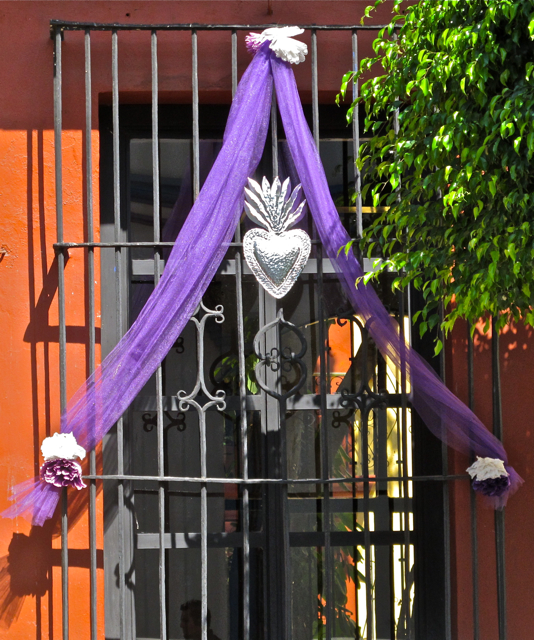
Decorations began going up around town yesterday…

window decoration: purple tule, tin heart, and flowers

Sidewalk stands are set up,  some more elaborate…

Purple decorations hanging from lona

than others…Small agua fresca stand

And, what does one do with the empty (and not-so-empty) cups?

Empty cups on window sill

Decorate a window sill, of course!

Read Full Post »

« Newer Posts