Today, March 19, is Día de las Artesanas y Artesanos (Day of the Artisans). In celebration, I would like to honor three of Oaxaca’s passionate, talented, and innovative artisans whose exhibitions I was fortunate enough to see last month.
To all artisans, thank you for your passion, commitment, and creativity. Your dedication to your art, often calling upon centuries of tradition, enriches our lives — bringing us joy as well as making us think.
Spring has sprung in the valley of Oaxaca and that means the hottest and driest months are upon us. Despite conventional wisdom, the temperatures actually cool down a little in the summer, when the afternoon/evening rains come. I confess, this time of year, when the thermometer hovers around 90º (Fahrenheit), by early afternoon my energy is sapped and motivation melts away. Hence, blog posts are few and far between. However, today is a little cooler and my blog’s namesake inspired me to let my fingers not just hover over keyboard, but actually type!
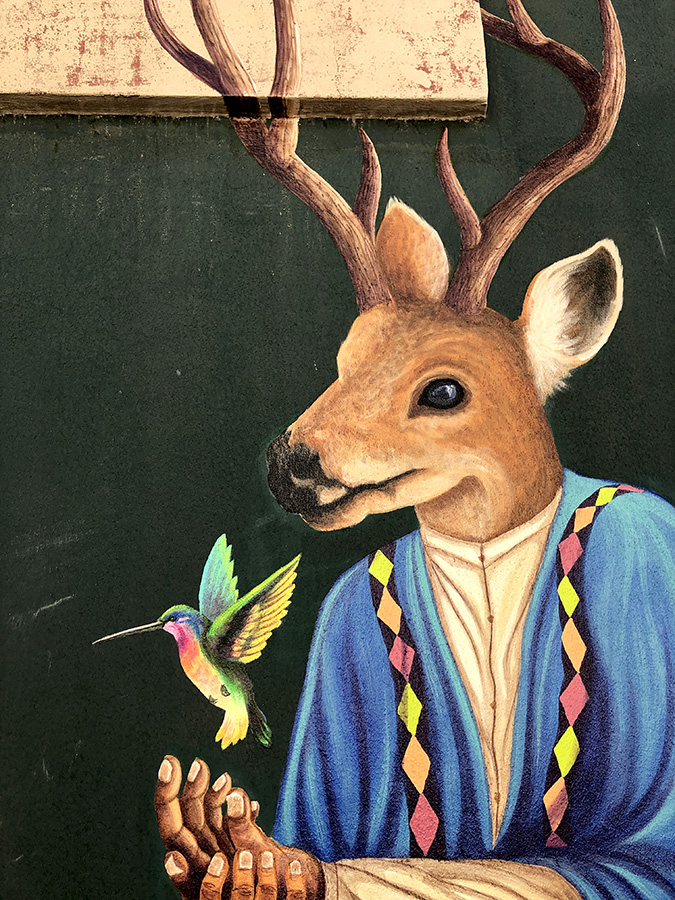
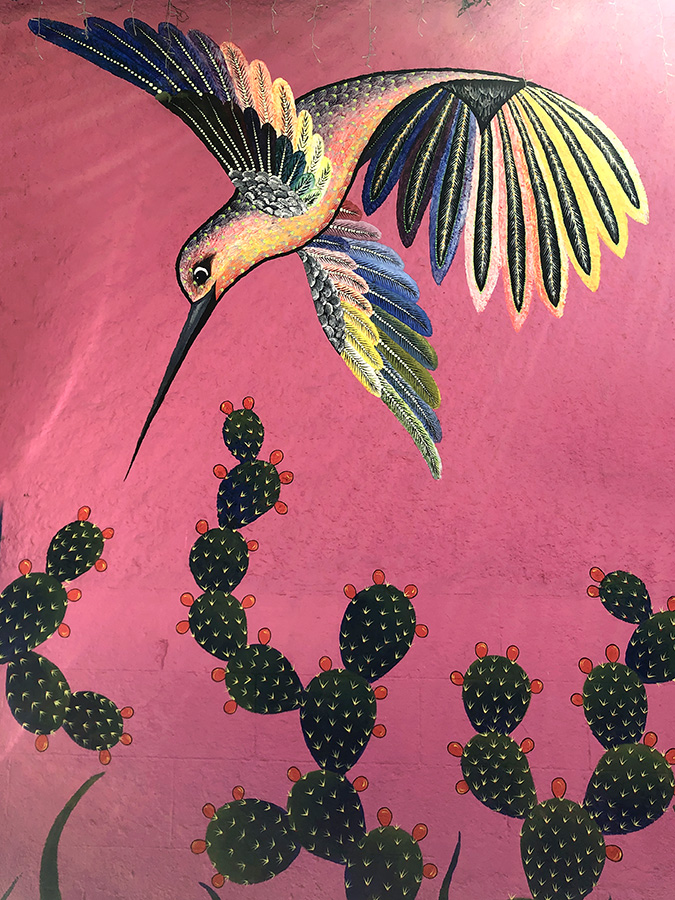
Colibríes in murals seen on walls around the city…
Hummingbirds are noted for their incredible ability to fly. They can hover suspended in the air and can fly in any direction, even sideways and backwards, allowing them to reach their food anywhere. Their powerful chest muscles are extremely developed (they can account for around 30% of their body mass) and this allows them to beat their wings very rapidly, from an incredible 80 wing beats per second, up to a staggering 200 wing beats per second when performing certain maneuvers during courtship. Their muscles also allow them to reach amazing speeds, ranging from 50 to 95 km/hr when diving in flight during courtship.
A .pdf of the book is free to download from the above link.
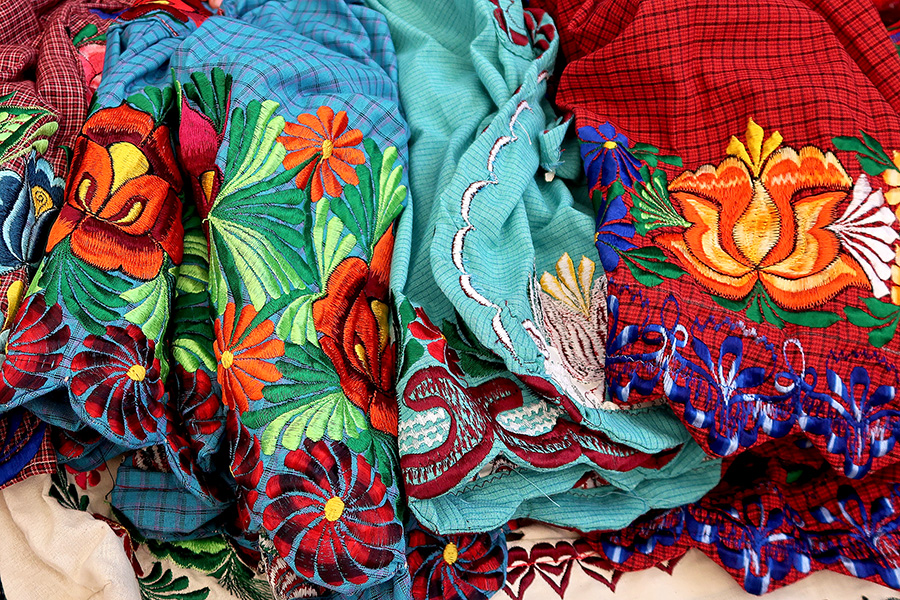
As I’ve mentioned before, the ubiquitous aprons (mandiles) worn by the Zapotec women of the valley of Oaxaca have been elevated to an art form. Each village has developed their own unique style and none is more distinctive than those worn by the women of San Miguel del Valle.
Their full-skirted pinafore style aprons, made from poly-cotton plaid fabric, are elaborately machine-embroidered with colorful flowers and birds. Worn daily, they are the “uniform” of the women of the village beginning when they are little girls. And, most women have a wardrobe full — one to match each dress.
Thanks to microfinancing assistance from Fundación En Via, many of the women have developed profitable businesses selling these aprons and also have branched out to making tote bags and purses. The Fundación recently held a 3-day expo-venta in Oaxaca city and guess what I came home with?
I’m hoping to go on one of the Fundación microfinancing tours next month — to meet and learn from the women who benefit and to further contribute to this worthwhile endeavor. Empowering women empowers communities!










 Mexican Peso Converter

 View From Casita Colibrí