Feeds:
Posts
Comments

Posts Tagged ‘Día de la Virgen de Juquila’

If you don’t like clanging bells, fireworks bursting in air, and navigating procession-blocked streets (at all hours of the day and night), you might want to avoid being in Oaxaca in December. The month heralds seemingly round-the-clock joyous, sometimes solemn, and mostly noisy celebrations. This month, honoring the feast days of the Virgins of Juquila, Guadalupe, and Soledad elicits some of the most enthusiastic, lengthy, and loud festivities of the year.

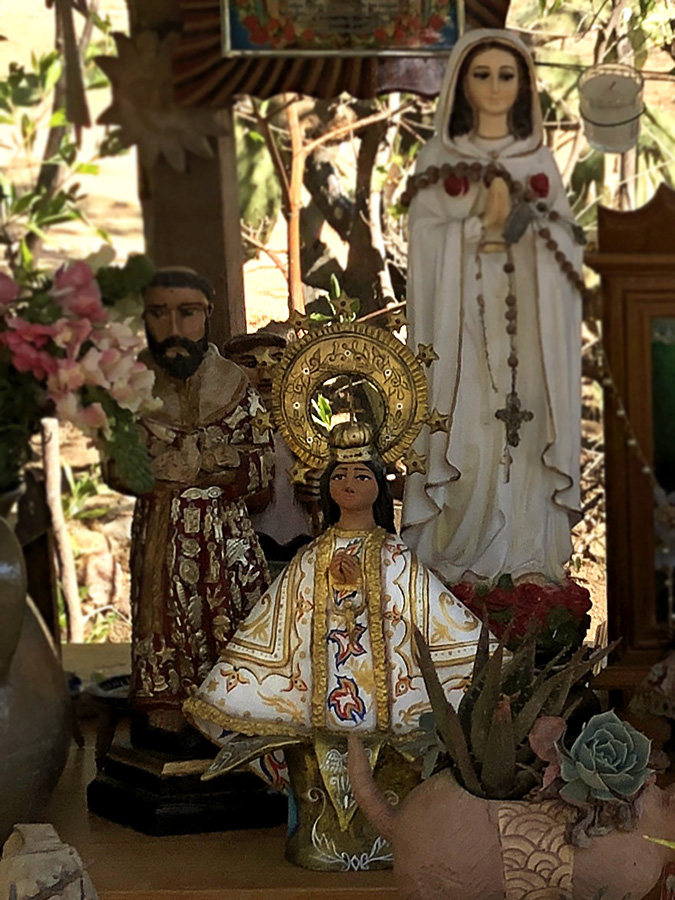
December 26, 2023 – Juquila, Guadalupe, and Soledad on altar at the workshop of Jacobo and María Ángeles in San Martín Tilcajete.

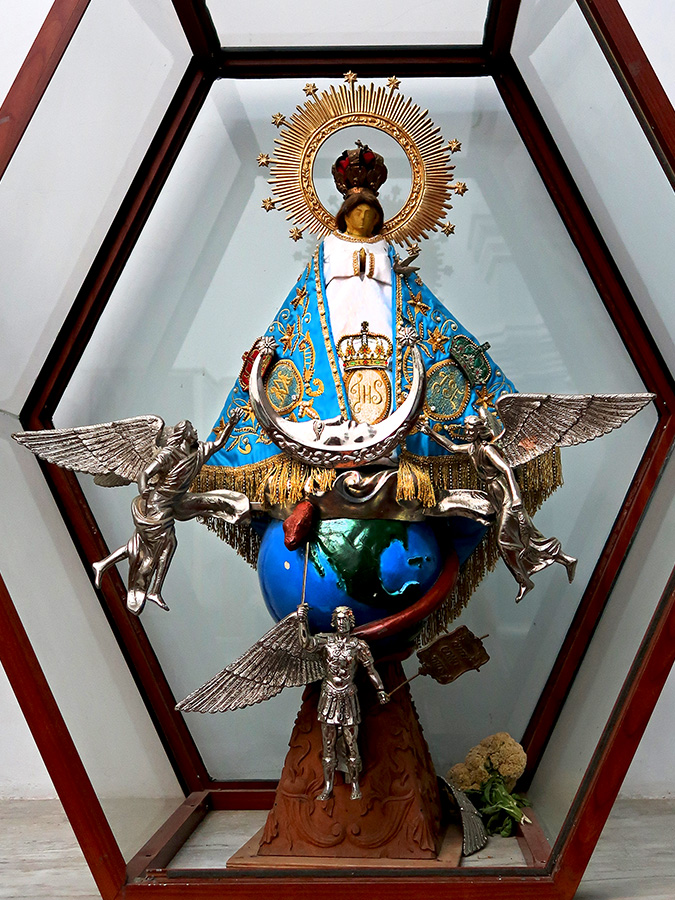
December 8 marks Día de la Virgen de Juquila — the first of the three virgins being celebrated this month. Observances began weeks ago as pilgrims began their peregrinations to her tiny Chatino village of Santa Catarina Juquila. And, in Oaxaca city, processions began filling the streets, cohetes (rockets) began exploding, and church bells sounded announcing special misas (masses).
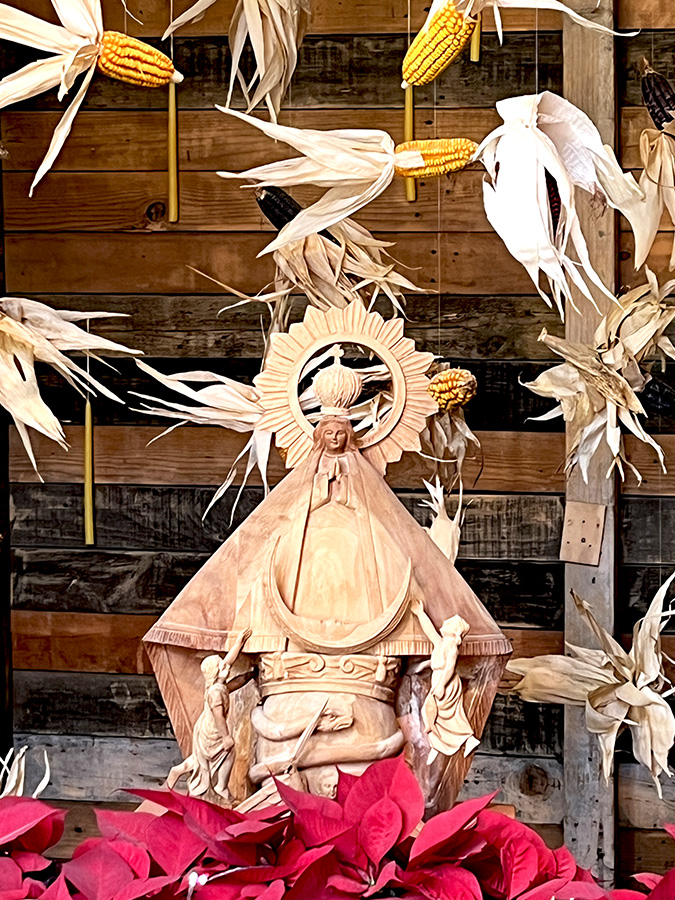
December 26, 2023 – Close-up of Juquila on the altar at the workshop of Jacobo and María Ángeles in San Martín Tilcajete.
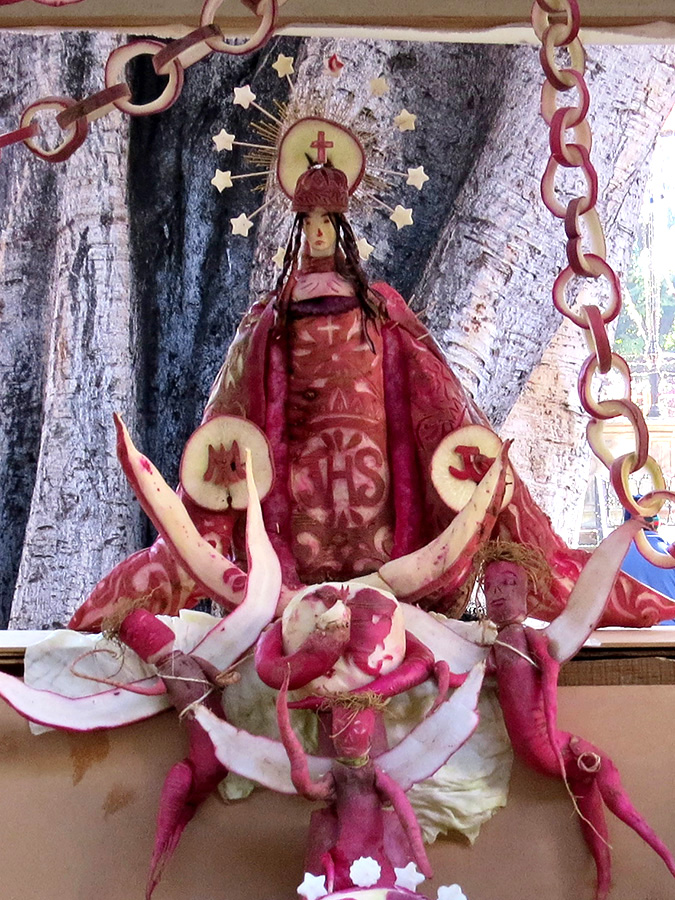
December 23, 2023 – Juquila carved from radishes. Noche de Rabanos, Oaxaca de Juárez.
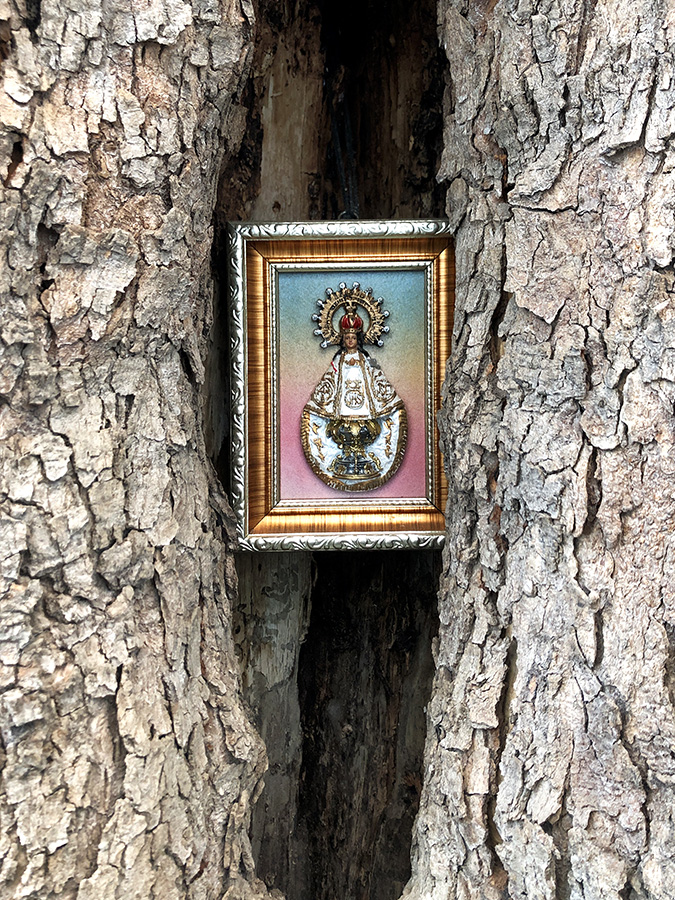
November 4, 2023 – Juquila enclosed in glass, Ocotlán de Morelos.

Next on the on the calendar is the more widely known date of December 12, honoring la Virgen de Guadalupe, aka, Queen of Mexico, Empress of America, and patron saint of México. However, the celebrating has already begun and besides fireworks, processions, and church bells chiming, professional photographers set up “Guadalupe grottos” outside Oaxaca’s Templo de Nuestra Señora de Guadalupe so, after being blessed inside the church, parents can have their little boys and girls, dressed in traditional traje (costume), photographed. Once finished, all can partake in the rows upon rows of food stalls, carnival rides, and puestos selling toys, Santa hats, Christmas lights.
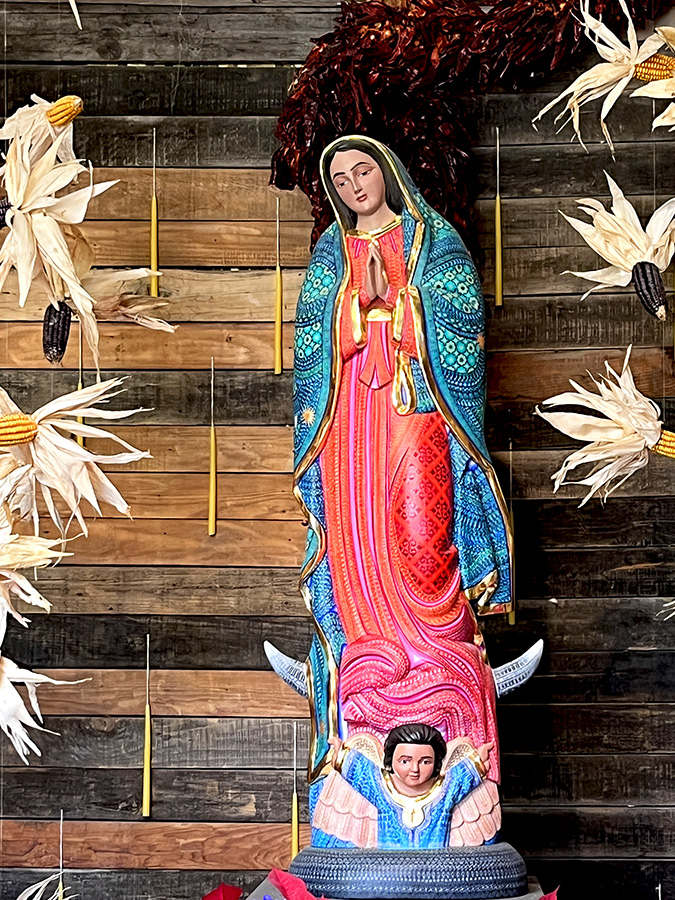
December 26, 2023 – Close-up of Guadalupe on the altar at the workshop of Jacobo and María Ángeles in San Martín Tilcajete.
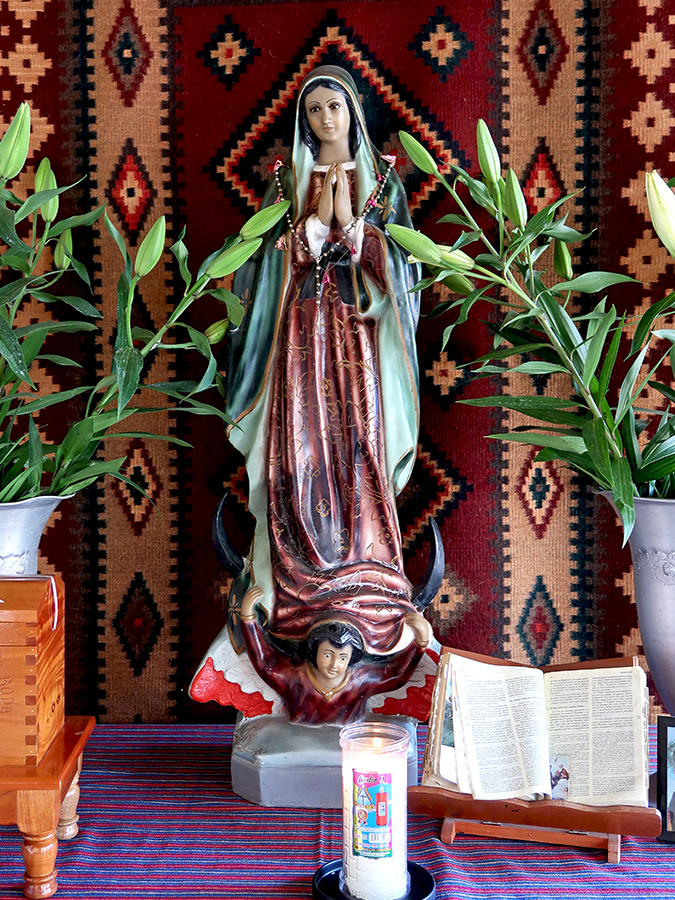
January 19, 2024 – Guadalupe on an altar set up in a private home prior to a wedding in Teotitlán del Valle.
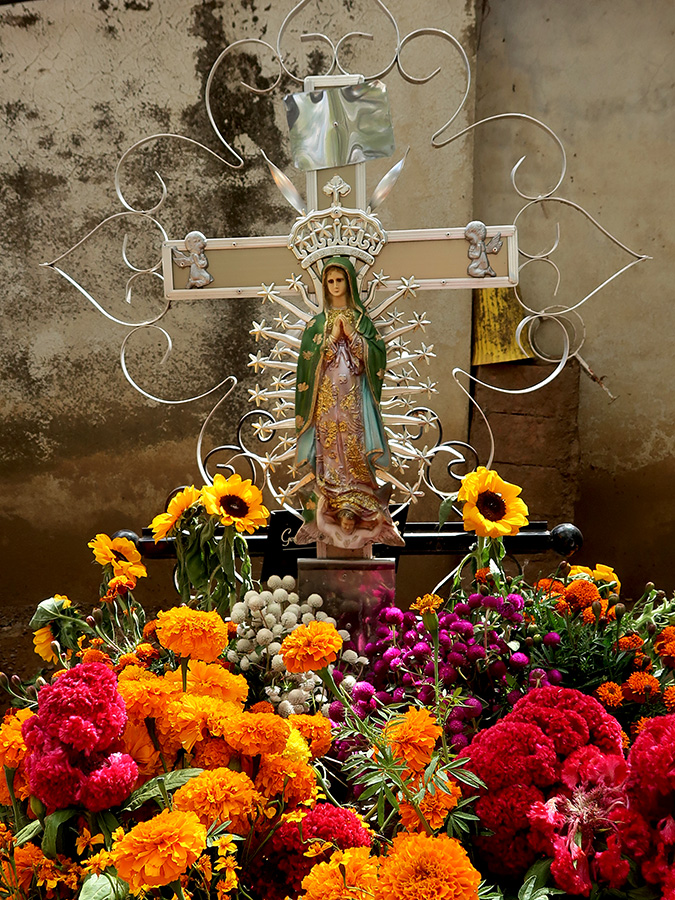
November 4, 2023 – Guadalupe watching over a grave in the cemetery of San Antonino Castillo Velasco.
January 8, 2024 – Stylized Guadalupe on Calle Mártires de Tacubaya in Oaxaca de Juárez.

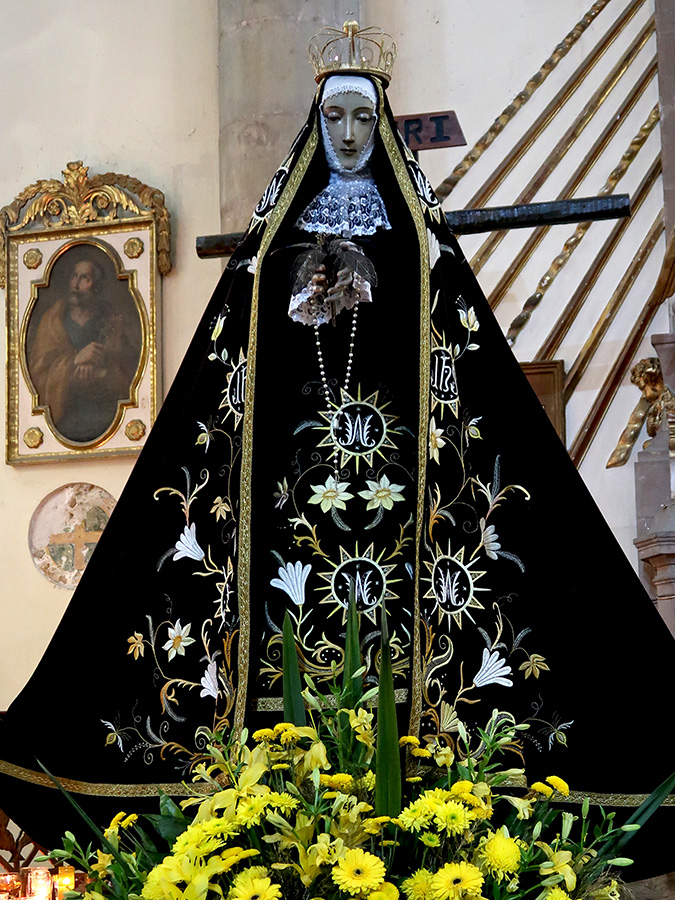
Last, but not least for Oaxaqueños, is December 18, the feast day of the much loved and revered, Queen of Oaxaca, La Santísima Virgen de La Soledad (Virgin of Solitude). Festivities with special religious rites, processions, and fireworks usually begin in early December, overlapping with Juquila and Guadalupe. Soledad’s celebration culminates with hundreds of her devotees camping out in the atrium of her church, the Basílica de Nuestra Señora de la Soledad, on the night of December 17 — with musical entertainment throughout the night, afternoon cultural performances the next day, and several outdoor masses from before dawn to nightfall on the 18th. Food stalls take over the stairs leading to the Basílica and the street below (Independencia) is closed for several blocks with carnival rides and stalls selling more sweets and savories, religious tchotchkes, clothing, and much more. It’s lively, crowded, and loud!

December 26, 2023 – Close-up of Soledad on the altar at the workshop of Jacobo and María Ángeles in San Martín Tilcajete.
December 23, 2023 – Soledad carved from radishes. Noche de Rabanos, Oaxaca de Juárez.
December 19, 2023 – Soledad in her home at the Basílica de Nuestra Señora de la Soledad, Oaxaca de Juárez.

I’m still in el norte and all is quiet. While it makes for a better night’s sleep, I’m missing the raucous and joy-filled cacophony that fills Oaxaca’s days and nights in December.
Read Full Post »

Hanukkah is upon us and Christmas is only weeks away. However, here in Oaxaca, it’s three images of the Virgin Mary who take center stage this month.

And, if you are in Oaxaca, please know the cohetes (rockets) will be exploding from early morning to late at night.

Read Full Post »

This morning, before dawn broke, the booms of cohetes celebrating Día de la Virgen de Juquila woke me from a dreamy sleep. A rude awakening? Not really. After all these years, the sound makes me smile. The all-bang-no-bling rockets mean something is being celebrated. Since mid November, pilgrims from all over Latin America have been traveling to Santa Catarina Juquila, Oaxaca, Mexico. They arrive by bus, bicycle, motorcycle, on foot, and on their knees to pay homage, give thanks, and ask for blessings in front of the tiny image of la Virgen de Juquila. According to this article, they will continue to make the pilgrimage until December 28.

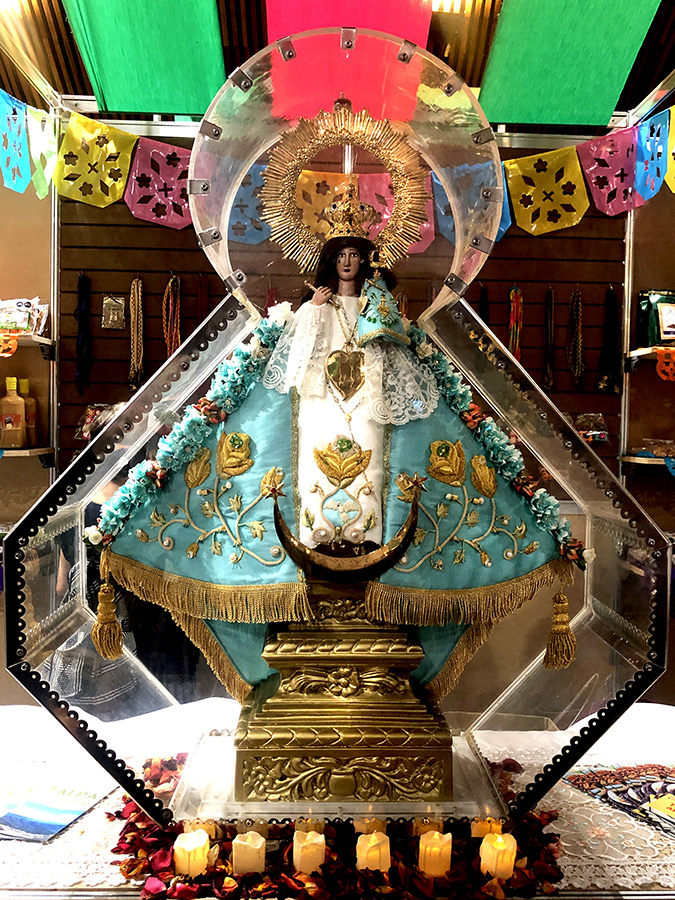
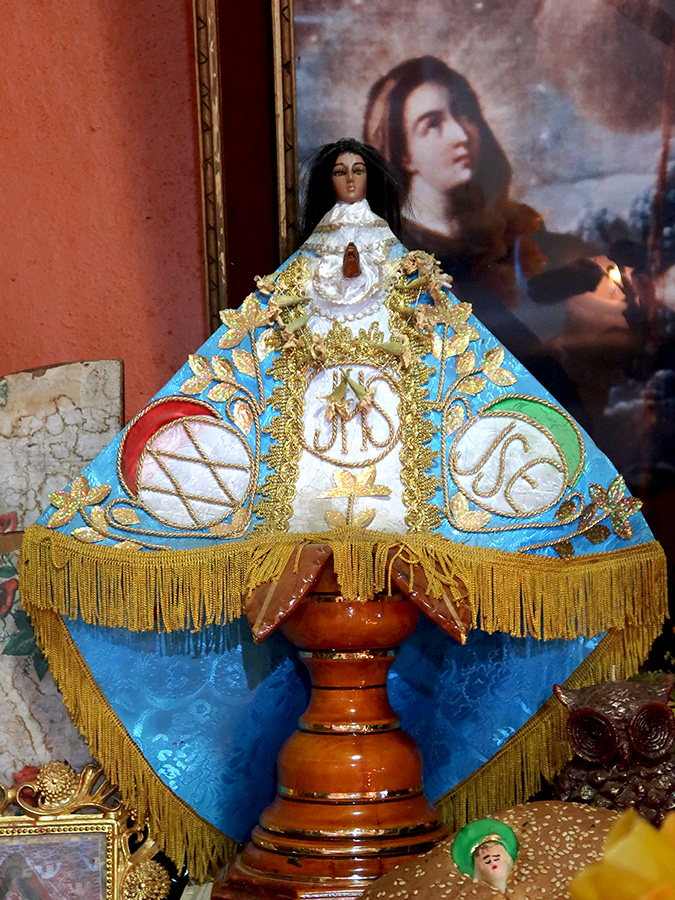
Image of the Virgin of Juquila on display in the booth of Santa Catarina Juquila at an exposition of Mexico’s Pueblos Mágicos held in Oaxaca.

Why do they come? According to legend, in 1633, when a fire burned the Chatino village of Amialtepec to the ground, a small wooden statue of the Virgin Mary was rescued amidst the ashes. She was undamaged, save for her light skin color, which was permanently darkened by the smoke, causing her to more closely resemble the Chatino people, who live in this remote mountainous region between Oaxaca city and the Pacific coast. Local priests declared her survival a miracle and her veneration commenced. However, that wasn’t the end of the story; the priest in the village of Santa Catarina Juquila convinced the “powers that be” that she should be moved to the bigger and better church in Juquila. She, however, had other ideas and returned to Amialtepec. This back and forth continued another three times. Finally, in 1719, La Morenita (the dear dark one), as she had come to be known, gave up her traveling ways and agreed to call Santa Catarina Juquila her permanent home.

Image of the Virgin of Juquila nestled on an altar in the garden of the restaurant Almú in San Martín Tilcajete.

She “is a symbol of love, of protection, of justice, of peace, of respect for human dignity.”  And, because of her indigenous roots, “the homage to the Virgin of Juquila is similar to that rendered to the Virgin of Guadalupe, not only in Oaxaca, but also in Puebla, Tlaxcala, State of Mexico, Veracruz and Chiapas, as well as in the United States, for the religiosity of migrants.”

Image of the Virgen of Juquila on the home altar of a family in Teotitlán del Valle.

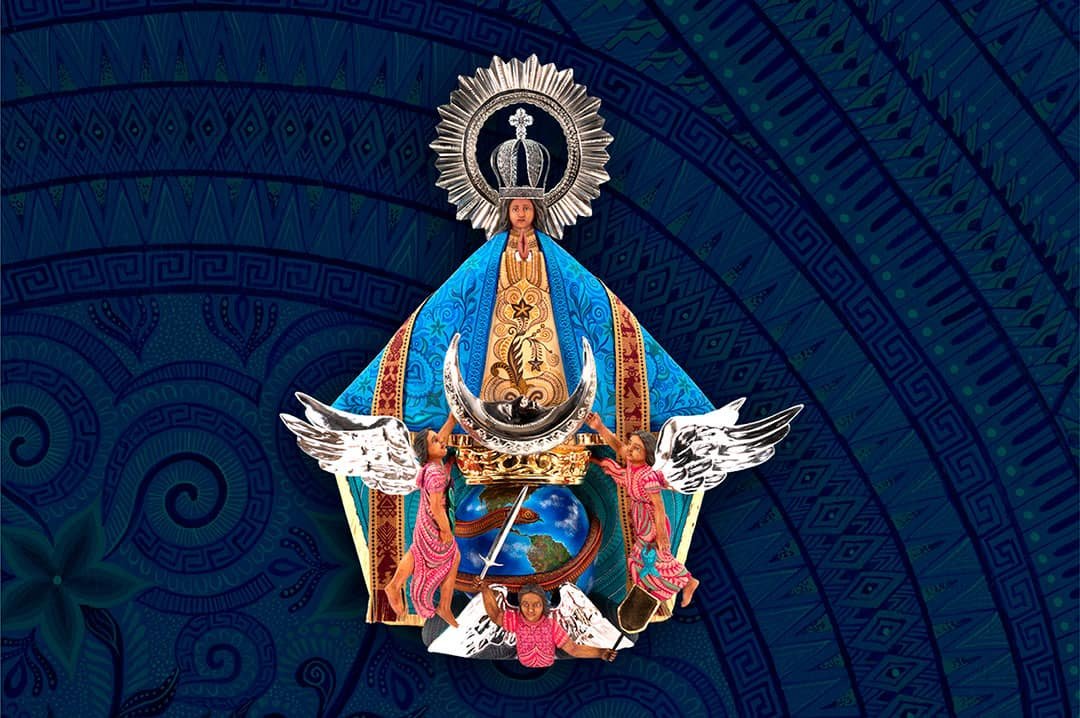
On October 8, 2014, la Virgen de Juquila received a papal coronation — hence the crown seen in images one, two, and four. And, on October 26, 2022, a delegation from Oaxaca traveled to Rome to present Pope Francis with a very special image of la Virgen de Juquila. It was a collaborative work carved and painted in the Jacobo and María Ángeles Workshop in San Martín Tilcajete, with metalwork by Conrado Villegas Alcázar and filigree work by the jeweler José Jorge García García, both from Oaxaca city. Her vestments were made by Elsa Abigail Mendoza Antonio from Santo Tomás Jalietza.

This is the Virgen de Juquila presented to Pope Francis. The photo is from the Jacobo and María Ángeles Workshop website.

Read Full Post »