Feeds:
Posts
Comments

Posts Tagged ‘Casita Colibrí’

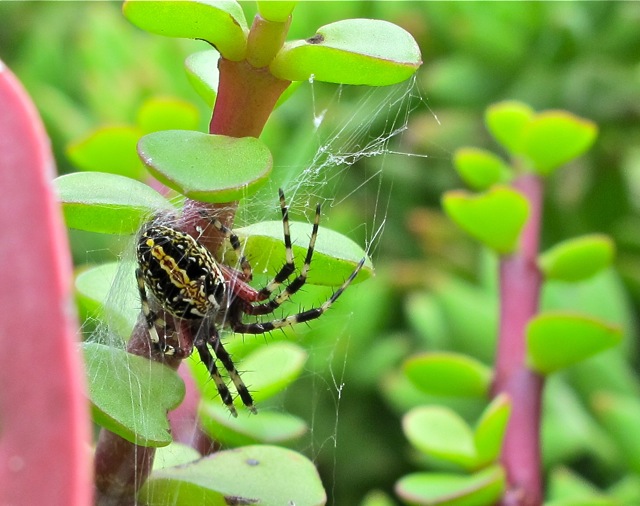
Clothing, tablecloths, and rugs aren’t the only things being woven in Oaxaca.  The terrace has a new resident, an orb weaver spider (family Araneidae).  I think, because of the stabilimentum (the white zigzags on the web), she is in the genus, Argiope.

Orb weaver spider on web in Stalpelia gigantea.

She had a larger orb weaving neighbor in the pot next door…

Alas, after a couple of days, the neighbor disappeared and her carefully crafted web fell into disrepair.  However, that left more food for Argiope.

Orb weaver spider on web with wrapped up green bottle fly

Apparently, green bottle flies are a favorite, because this is one of several she caught in a single day.  She’s chosen the perfect site for her home — in the garden’s previously blogged about, Stinky plant, attracting flies (aka, Stalpelia gigantea).

Read Full Post »

Yesterday, the clouds gathered, the sky darkened, and about 5 PM…

And, yes, I did jump!

However, it’s no laughing matter for the farmers and folks who live near rivers.  Río Atoyac, which runs alongside the heart of the city and which one must cross to reach the airport, rapidly reached flood stage and breached its banks in several places (Noticias has video).  In addition, because the ground is already supersaturated, mudslides have already begun to occur in the mountains.

CONAGUA explains that the large area of atmospheric instability over the Gulf of Tehuantepec along with tropical depression 13 in the Gulf of Mexico (that’s the one threatening Louisiana), are the moisture-laden culprits.

Read Full Post »

Returned from the mercado this afternoon to find…

Garden pot breaking on top of the garden god

… a crack in the pot.  Garden god bursting with pride???

Read Full Post »

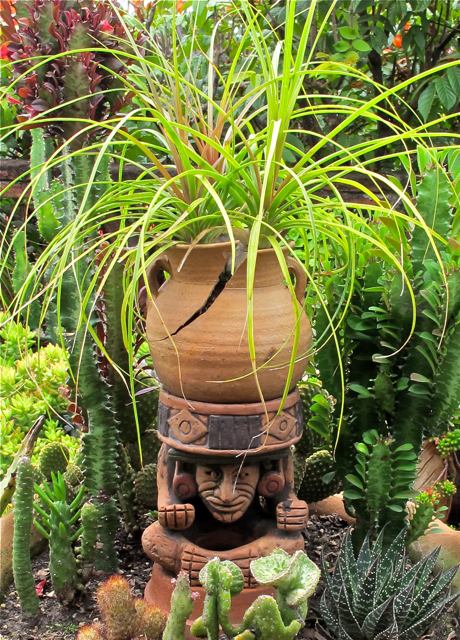
Torrential rain by night; brilliant blue sky by day…

Garden god surrounded by succulents and cactus

This is the way the garden grows during the rainy season in Oaxaca.

Read Full Post »

Back on January 10th, I posted a photo of a pupa that had materialized on my plumbago while I’d been up in the USA for a month.Butterfly pupa hanging on a plumbago stem
What I haven’t mentioned is that the next day, it moved!  It began traveling up and down the plumbago.  I ran inside, grabbed my new Canon G12, set it to video, and began recording.  Video was edited, music was added, and the following resulted:

However, that isn’t the end of the story.  I kept close tabs on the terrace’s new resident, checking daily, but no more plumbago strolling; the pupa remained firmly fastened to one of the branches.

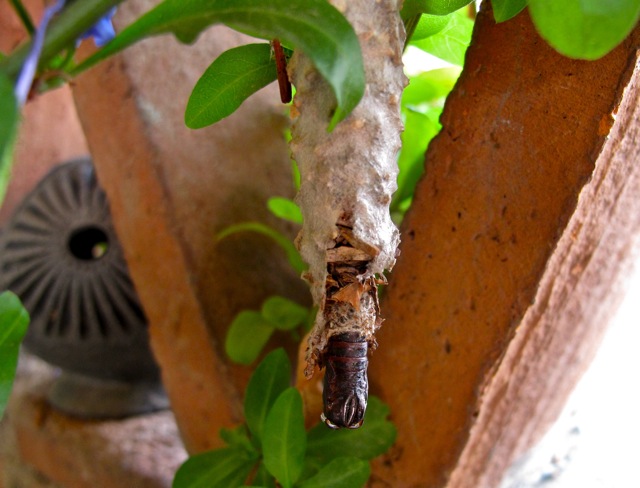
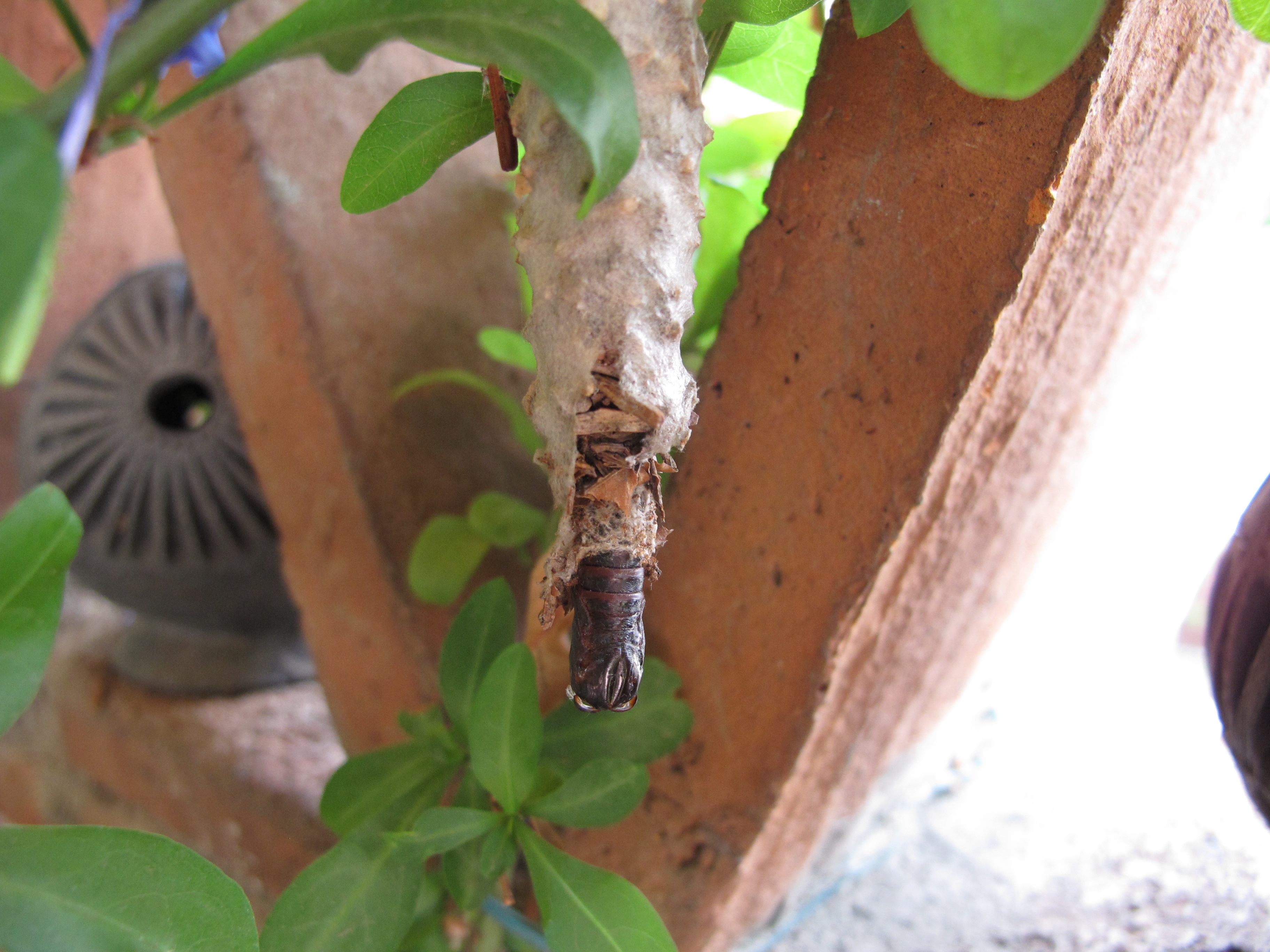
Then on April 17th, over 3 months later, I noticed a significant change in the pupa…

Butterfly pupa
A butt protruding?  Was a butterfly in the process of emerging???  Daily observations continued… no change.  I returned to the USA for a month, returned to find… NO change!

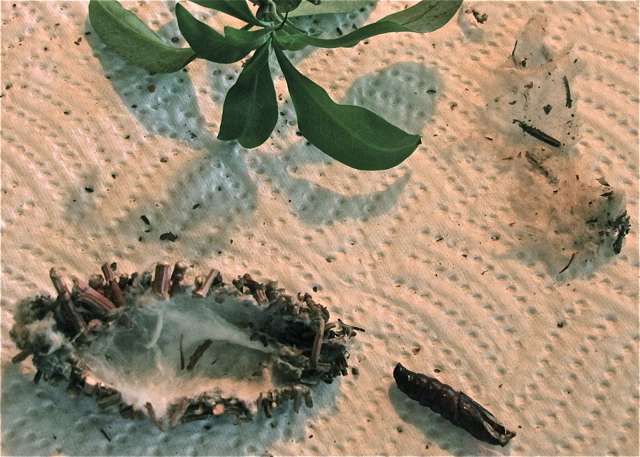
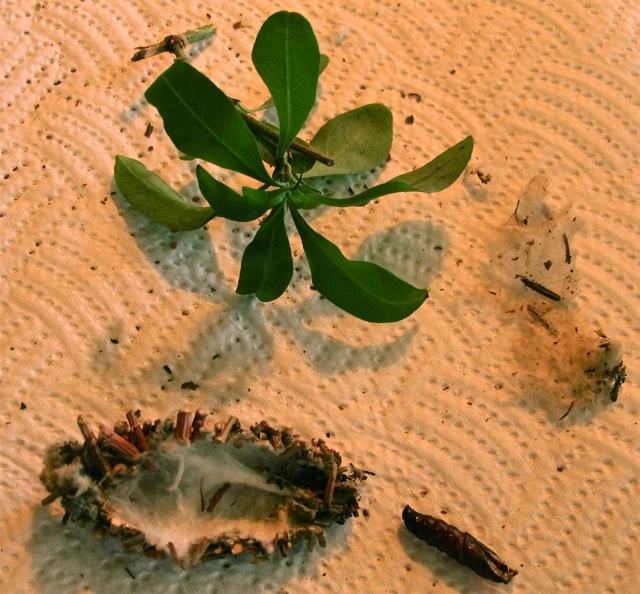
Finally, on July 2nd, I couldn’t stand it any longer.  With the Skype encouragement from my friend G, I snipped the pupa from its home of almost six months and began a dissection;  the industrial strength silk was peeled away and the woody chrysalis was cut into with my gardening shears… a hollow shell of the “butt end” and an empty cottony interior was revealed!

Open chrysalis, silk from pupa, shell, and leaves from plumbagoThe butterfly had flown…


Save

Read Full Post »

Way back in the very early 1980s, I was captivated by the PBS series, The Flame Trees of Thika, based on the Elspeth Huxley memoir, by the same name, about her early years in Kenya.

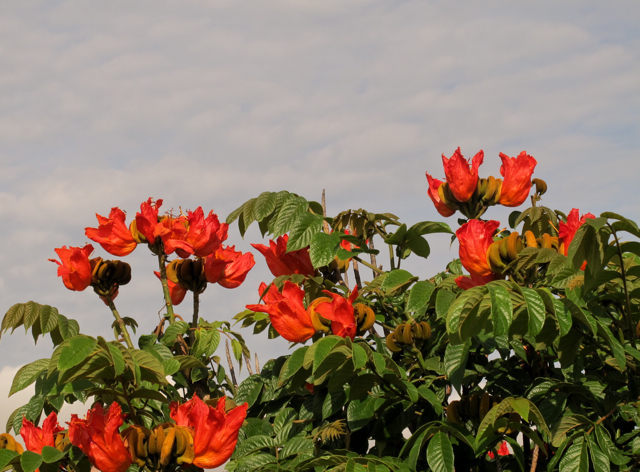
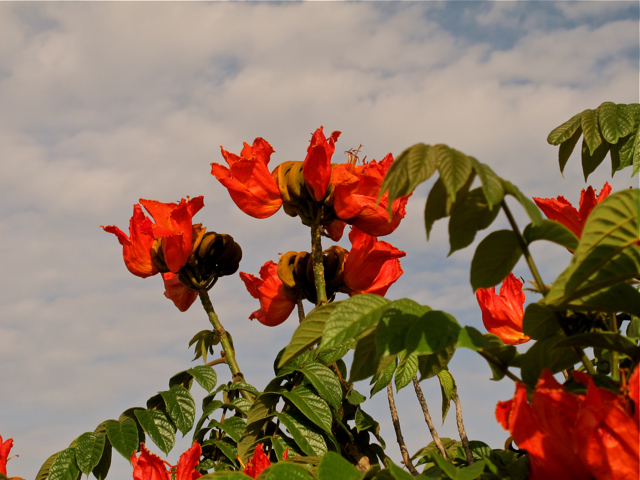
African Tulip tree reddish orange blossoms

We had a black and white TV back then and so, if they even showed the “Flame Trees,” they never “registered.

African Tulip tree reddish orange blossoms

However, here I am in Oaxaca, Mexico and I’ve got two African Tulip Trees (aka, Flame of the Forest) hovering over my terrace, bursting with color, providing a modicum of shade, feeding the hummingbirds, and adding to the enchantment of Casita Colibrí.

African Tulip tree reddish orange blossoms

There was something about the sky, the light, and the trees this morning…

Read Full Post »

Twenty-four hours in the life of one of the more bizarre, and almost prehistoric-looking, residents of the terrace garden, a Stapelia gigantea

This slideshow requires JavaScript.

Trying to identify this plant I did a Google search using the terms:  cactus, stinky, flies, star flower… because it definitely smells gross, has incredibly large zebra striped star-shaped flowers, and is a favorite of green bottle flies!

Read Full Post »

And now a pause in our Semana Santa coverage…

Yesterday was a momentous day at Casita Colibrí.  I arrived home just in time to watch the removal of my late, previously mentioned, but definitely not lamented, baby-size tinaco and the installation of my gigunda, new, and much wished for, tinaco.  It was a sight to behold!

This slideshow requires JavaScript.

These guys looked so young… but worked efficiently and seemed to know exactly what they were doing.  I sure hope so!

Fingers and toes, but not eyes, are crossed that this will, at long last, solve my every-other-day lack of water problem.

Read Full Post »

… and then there was the “Exploring Oaxaca for Mammillaria and Echeveria” lecture, sponsored by the Oaxaca Garden and Nature Club.

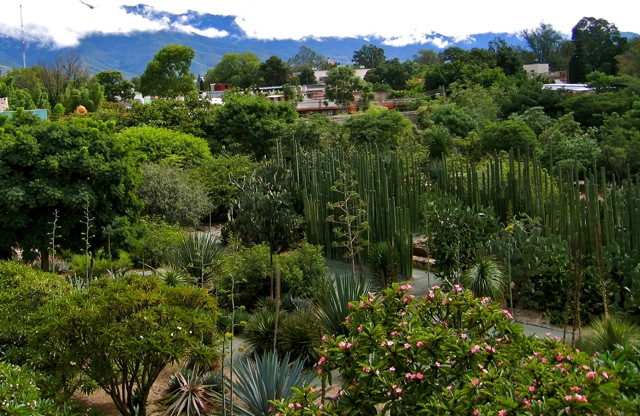
The lecture was held at the Jardín Etnobotánico de Oaxaca. The gardens are part of the magnificent old monastery complex of Santo Domingo, and have a storied history. The Dominican Order began construction in 1570; during the revolution, the buildings were used to house the cavalry; at one time it was “made available” to the Universidad Autónoma Benito Juárez de Oaxaca; and in 1994 citizens protested plans to turn the grounds into a luxury hotel/convention center. Oaxacan artist and benefactor, Francisco Toledo and his foundation, Pro-Oax came to the rescue. The original impressive underground cistern system was uncovered and put into use and an (almost) 6-acre ethnobotanical garden was established to preserve, protect, and propagate Oaxaca’s rich biodiversity, that has nourished the people’s and their culture of this valley for thousands of years.

Garden at Jardín Etnobotánico de Oaxaca

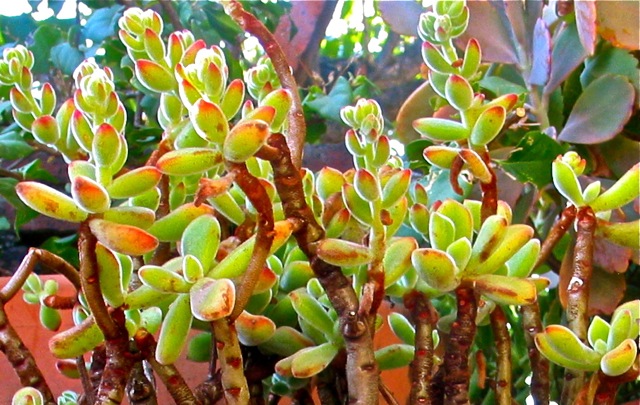
The speaker, John Pilbeam, is from England and leads expeditions to Oaxaca every year in a quest to see various cactus and succulents in their natural habitat.  He is a 70-year-old man with that wonderfully dry British sense of humor that he used throughout the talk… definitely not boring! I learned a lot, even the name of one of my favorite rooftop garden plants:

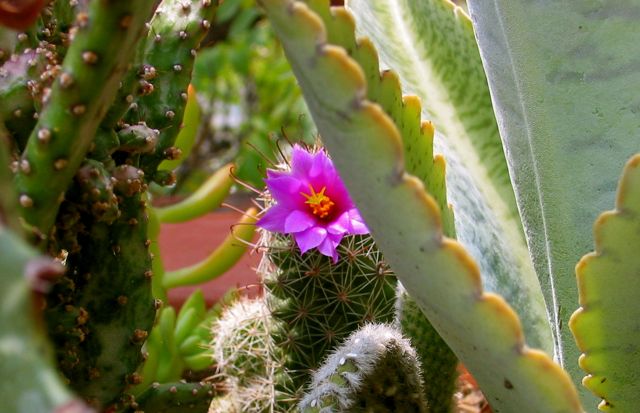
Echeveria Pulvinata "Ruby" at Casita Colibrí

Echeveria Pulvinata "Ruby"

The icing on the day’s cake, was John sat next to me at the luncheon that followed at La Olla and we had several delightful conversations throughout the meal, including his stories of growing up in World War II, London.

Read Full Post »

Church bells and scorpions; I must be back in my new home.

My return to Oaxaca was long and bumpy, with thunderstorms populating almost the entire trip.  A rocky ride was had by all.  The pint-size Embraer landed at 11 pm — pretty late for Oaxaca’s little airport.  However, as we alighted from the plane, the land crew provided welcoming umbrellas to protect us from the downpour, as we dashed across the blackened tarmac to the terminal.  With luggage retrieved, green light received, and boleto purchased, I jumped into the waiting and wonderful white airport van.

First to be dropped off, I pulled and dragged my suitcases up the two flights of stairs (trying not to awaken my sure-to-be sleeping neighbors along the way) and into the waiting embrace of Casita Colibrí, only to be greeted by carpenter’s tools strewn about and my bathroom door off its hinges — evidence of a project that was 2/3rds completed when I left six weeks before.  Not a problem, I told myself.  Then, my toilet wouldn’t flush.  No big deal, I told myself.  However (drum roll, please), when I came face-to-face with a scorpion in my bathroom sink, that WAS a problem!
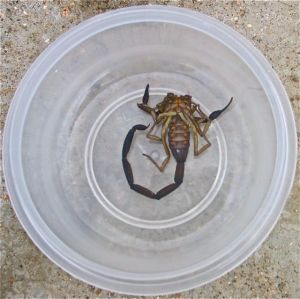
I tried to be a “grownup” but it was my first real live scorpion and it totally freaked me out.   Eventually, I managed to send it on its way to the big alacrán casa in the sky.  I will spare you the details but suffice it to say, among other things, it involved saran wrap and duct tape.  Scorpions tend to carry on their scorpion business at night and, needless to say, sleep has not come easily since my close encounter.  However, like a good former reference librarian, I’ve done my research and discovered that the sting of the local variety of scorpion may be painful but is generally not deadly to healthy adults, lavender is used in France as a repellent, and people in the US Southwest report success using cedar oil to keep these creepy creatures out.  Now to find one or both…   In the interim, I reluctantly purchased and used one of several toxic sprays found on Soriana’s shelves — moderate peace of mind must be achieved if I am to get a good night’s sleep!

It took almost a week, but unpacking has finally been completed, suitcases stored, apartment has been tidied, carpenter has put my bathroom door back on, I’ve  fixed my toilet, and the pantry has been restocked.   I again awake to church bells chiming, geckos chirping, and colibrís zipping across my terrace.  My African Tulip trees are in bloom…

… and tonight I’m going to watch the Guerreros de Oaxaca play the Piratas de Campeche with my best friend in Oaxaca!  It’s good to be home…

Read Full Post »

… it must be time to water Casita Colibrí’s growing garden!

Casita Colibri sign

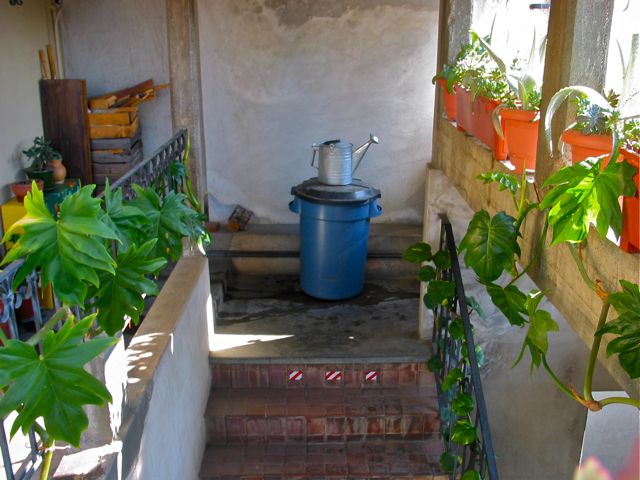
The 112 containers, from 6″ to 24″ pots and 30″ x 8″ x 8″ planter boxes decorating my entry and terrace, are brimming with one to twelve succulents and cacti.  They are watered weekly with gray water — shower water, dish water, and rain water, the latter when and if it ever rains again!  Oh, and then there are the 2 bougainvillea, 1 plumbago, 1 gardenia, 1 geranium, and pot of herbs, which require watering two to three times per week in this 90+ degree heat.  Water is an especially precious resource here in Oaxaca and we tenants must pay for all water deliveries to our compound.  So, in order to nurture my garden, everyday I haul buckets and dish-pans out through the terrace gate to my collecting barrel, a 32-gallon (not so sweet-smelling) plastic garbage can.  The plants don’t seem to mind the hand-me-down, fetid, murky water — in fact, they appear to love it!

Water barrel

With a few exceptions, my original garden was propagated from slips lovingly cultivated by my neighbor G, from his own exuberant and thriving terrace garden — a garden so profuse that there is scarcely room to walk!  When I arrived ten months ago, I was a disbeliever, never imagining that my terrace, too, could become home to a lush riot of greens, grays, magenta, red, yellow, orange, white, and blue.

An added bonus, besides (hopefully) filtering at least some of the exhaust from the diesel buses that race each other up the hill, the vegetation attracts a host of critters — giant friendly bumbling black bumblebees zeroing in on blossoms; geckos skittering across the pottery and terrace walls in the morning and afternoon, catching their breakfast and dinner; large brown crickets that like hang out in my “greens” recycling basket, not minding or even moving when I add more spent flowers and cuttings; and birds, including my home’s namesake colibrí, flitting back and forth across the terrace, chasing insects and sipping nectar from cactus and succulent flowers.

Garden God presiding

My garden never ceases to inspire, reward, and delight.  And… the garden god watches over it all!

Read Full Post »

« Newer Posts