It’s amazing how sometimes light, shade, and a pristine backdrop can come together to highlight something you have looked at hundreds of times, but have never really seen.
Early last week, on a stunningly clear blue sky day, I passed the La Catedral de Nuestra Señora de la Asunción (the Cathedral of Our Lady of the Assumption) and stopped dead in my tracks.
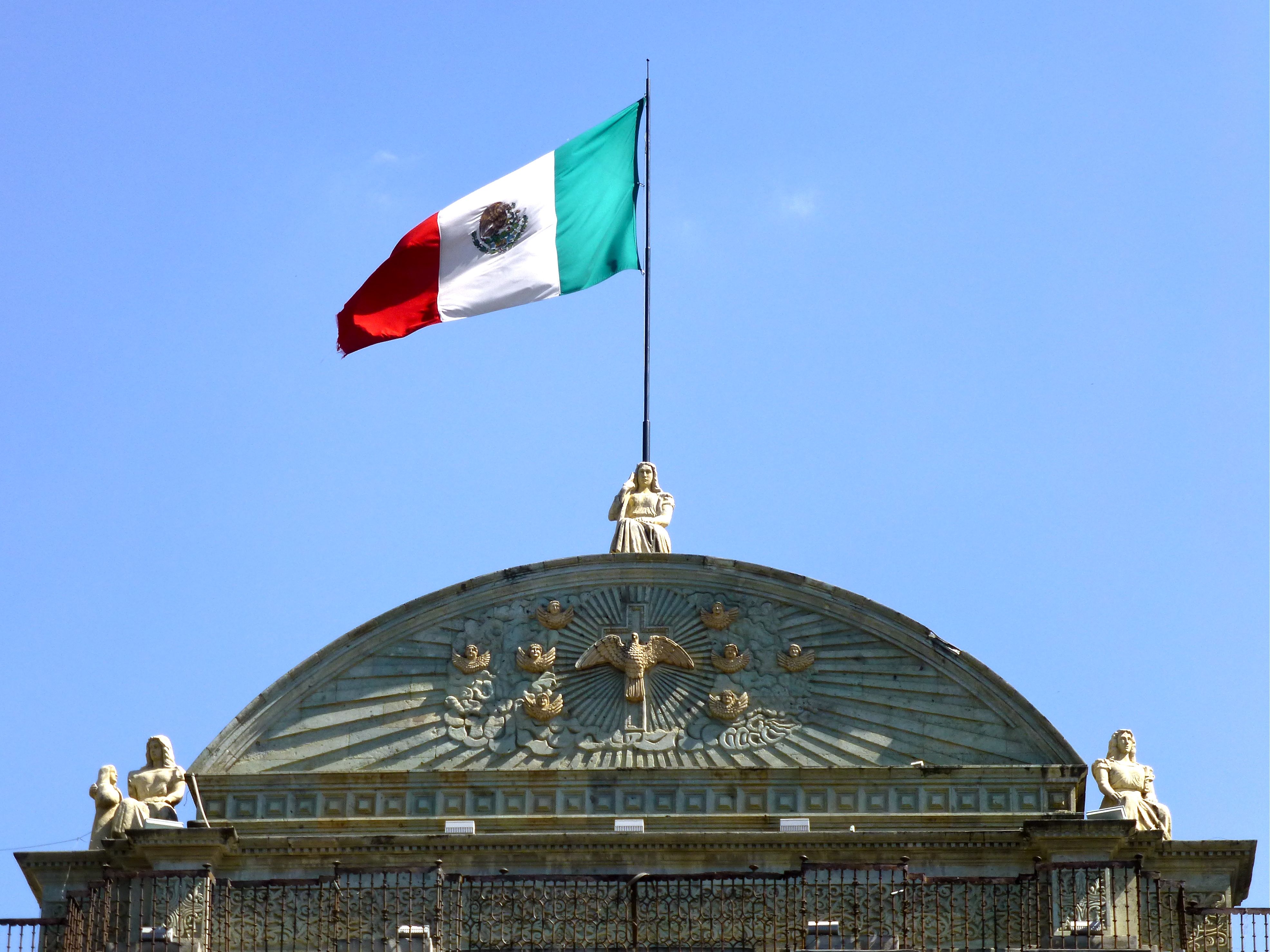
The flag must have been what initially caught my attention — it’s not an everyday occurrence — but what held my gaze were the three gals atop the Cathedral.

I wondered, are they new?
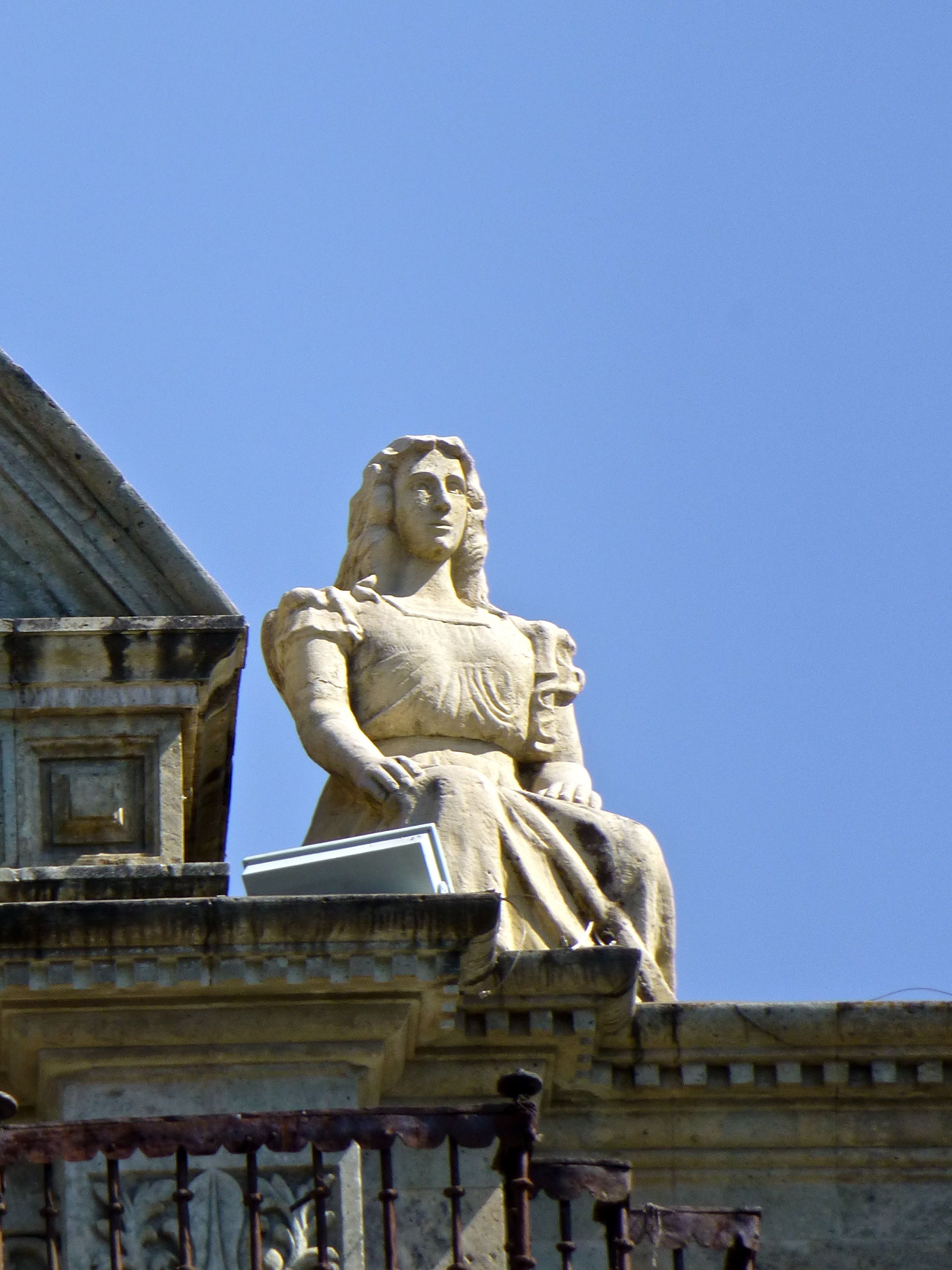
Once home, I scrolled through old photos I’d taken and sure enough there they were in every photo of the Cathedral’s facade.

Hmmm… How could I have missed their imposing presence?
Now to find out who they represent. (You can take the librarian away from the reference desk, but you can’t take the reference questions away from the librarian!) Anybody out there have any answers???


 Mexican Peso Converter

 View From Casita Colibrí
I don’t know what the architects intended but the emphasis seems to be on the role models of women in (i) rearing children (the child), (ii) education; educating self and children (the book), and (iii) providing (if that is a plant being held by the main figure). All are empowering symbols. Just conjecture though, since you asked.
What book Ian?
Ian, thanks for your thoughts. I wonder when they were added. There was a big push for women to remain in their traditional roles in the early 20th century. One of the results was importing the celebration of Mother’s Day from el norte. https://casitacolibri.wordpress.com/2012/05/10/lets-hear-it-for-the-mothers/
Perhaps we can take a clue from fashion.
The three adult figures seem to be sleeveless and with no head covering.
A bit immodest in context of the setting, I would say.
I agree, they are so incongruous to the setting. I’m going to keep asking around.